AI Rewires Young Minds For Future Tech Careers
The landscape of work is undergoing a profound transformation, driven largely by the relentless advance of Artificial Intelligence (AI). What was once science fiction is now becoming the foundational technology reshaping industries, creating new opportunities, and fundamentally altering what it means to pursue a career in technology. For today's young minds, this isn't just a technological shift; it's a redefinition of their professional futures, demanding a new set of skills, an adaptable mindset, and an ethical compass to navigate the emerging AI-driven world. The question is no longer "Are kids still looking for careers in tech?" but rather, "How are young people preparing for the vastly different tech careers AI is making possible?"
The AI Revolution: Shifting Paradigms in Tech Employment
Artificial intelligence is not merely a tool; it's an ecosystem, influencing everything from data analysis and automation to creative industries and scientific discovery. Its rapid evolution has already begun to automate repetitive tasks, leading some to fear job displacement. However, the more nuanced reality is that AI is also creating entirely new roles and augmenting existing ones, necessitating human-AI collaboration on an unprecedented scale. This paradigm shift means that traditional tech roles are evolving, and entirely new categories of jobs are emerging, often at the intersection of technology, humanities, and ethics.
For the aspiring tech professional, understanding AI's capabilities and limitations is no longer optional but essential. This understanding extends beyond coding to encompass the implications of AI on society, privacy, and even human augmentation. As AI systems become more sophisticated, the demand for individuals who can design, implement, manage, and critically evaluate these systems grows exponentially. The "rewiring" of young minds starts with recognizing that future tech careers will demand a blend of technical prowess and uniquely human attributes.
Beyond Coding: New Horizons in AI-Driven Roles
While foundational programming skills remain valuable, the AI era expands the definition of a "tech career" far beyond traditional coding. The demand for **AI ethics specialists**, for instance, is soaring as companies grapple with bias, fairness, and accountability in algorithms. **Prompt engineers** are becoming crucial, bridging the gap between human intent and AI output by crafting effective instructions for generative AI models.
Moreover, new interdisciplinary roles are appearing at the vanguard of human-AI collaboration. Consider **AI-powered product designers** who leverage machine learning to create intuitive user experiences, or **data storytellers** who translate complex AI insights into actionable narratives for businesses. In fields like healthcare, **AI diagnosticians** and **robotics engineers** are working alongside medical professionals, enhancing capabilities and extending human reach. The burgeoning field of transhumanism, which explores enhancing human intellectual, physical, and psychological capacities through technology, heavily relies on AI advancements in areas like neuroprosthetics, gene editing, and advanced bio-informatics. These future tech careers demand not just technical aptitude but also creativity, critical thinking, and a profound understanding of human needs and societal impact.
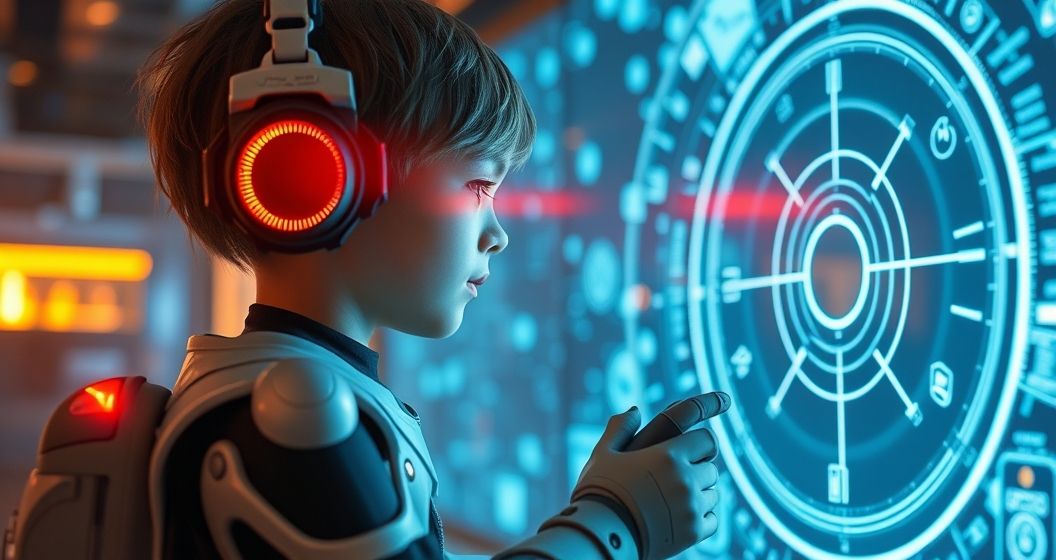
Preparing for Tomorrow: How Young Minds Are Adapting
WIRED's interviews with aspiring scientists highlight a crucial trend: young people are keenly aware of AI's transformative power and are proactively shaping their educational paths to meet future demands. They understand that passive learning is insufficient; active engagement with emerging technologies is key. This generation is growing up with AI as an omnipresent force, from personalized learning apps to generative art tools, naturally fostering a digital literacy that older generations had to acquire.
Their preparation involves an emphasis on interdisciplinary studies, blending traditional STEM subjects with critical thinking, humanities, and even arts. The goal is to cultivate a holistic understanding of how technology interacts with society and human experience. This forward-thinking approach is critical for navigating a job market where the most sought-after skills might not even exist yet. Aspiring professionals are increasingly seeking out opportunities for hands-on experience, whether through coding bootcamps, online courses, hackathons, or personal projects that leverage AI tools.
Essential Skills for the AI Age
In an AI-driven future, certain core competencies will become indispensable. While technical skills like data science, machine learning, and cybersecurity remain vital, the emphasis is shifting towards skills that AI cannot easily replicate:
* **Critical Thinking and Problem-Solving:** The ability to analyze complex situations, identify problems, and devise innovative solutions, often involving AI tools, is paramount.
* **Creativity and Innovation:** AI can generate content, but human creativity remains the driving force behind novel ideas, artistic expression, and strategic thinking.
* **Adaptability and Lifelong Learning:** The pace of technological change necessitates continuous learning and the flexibility to adapt to new tools, platforms, and methodologies.
* **Emotional Intelligence and Collaboration:** As AI handles more routine tasks, human interaction, teamwork, empathy, and effective communication will be valued even more in collaborative environments.
* **Ethical Reasoning:** Understanding the moral implications of AI development and deployment, and actively advocating for responsible AI, is a non-negotiable skill.
* **Digital and Data Literacy:** Beyond basic computer skills, this includes understanding how data is collected, analyzed, interpreted, and used by AI systems.
Education in Flux: Redefining STEM for AI Readiness
Educational institutions are recognizing the urgent need to adapt curricula to prepare students for these evolving tech careers. STEM education is being redefined to integrate AI and machine learning concepts from an earlier age, moving beyond rote memorization to foster computational thinking and practical application. Project-based learning, where students tackle real-world problems using AI tools, is gaining traction.
Universities are launching specialized degrees in AI ethics, human-computer interaction, and applied machine learning, reflecting the interdisciplinary nature of future tech roles. Beyond formal education, the proliferation of online learning platforms, certifications, and accessible AI tools empowers young learners to self-direct their education and explore niche areas of interest. This democratization of knowledge means that aspiration, curiosity, and persistence are becoming just as important as traditional academic credentials.
The Role of Mentorship and Experiential Learning
For young minds navigating this dynamic environment, mentorship plays a crucial role. Connecting with professionals already working in AI or related emerging technologies provides invaluable insights, guidance, and networking opportunities. Experiential learning, through internships, apprenticeships, and participation in hackathons or research projects, allows students to apply theoretical knowledge to practical challenges, gain hands-on experience, and build a portfolio relevant to future AI careers. These opportunities not only hone technical skills but also develop the soft skills—like teamwork, communication, and resilience—that are essential for success in any tech-driven field.
Navigating the Ethical Landscape of AI and Future Careers
The transformative power of AI comes with significant ethical responsibilities. As young people prepare for careers at the forefront of this technology, understanding and actively engaging with issues of algorithmic bias, data privacy, accountability, and the societal impact of AI becomes paramount. Future tech professionals will be tasked with building AI systems that are fair, transparent, and beneficial to humanity. This includes considering the long-term implications for employment, social equity, and even the definition of human consciousness, particularly as AI intersects with fields exploring human enhancement. A career in AI isn't just about building intelligent machines; it's about building a responsible future.
Conclusion
The AI revolution is not just rewriting code; it's rewiring the aspirations and skill sets of an entire generation. For young minds today, the pathway to a successful tech career is dynamic and exciting, demanding more than just technical aptitude. It requires a blend of critical thinking, creativity, adaptability, ethical awareness, and a commitment to lifelong learning. As AI continues to unlock possibilities and shape the future, the youth poised to lead this charge are demonstrating an inspiring readiness to embrace change, redefine what's possible, and build a tomorrow where technology truly serves humanity. The future of tech careers is not only bright but also deeply human-centered, powered by the incredible synergy between artificial intelligence and the unbounded potential of the human mind.
