Our Digital Body Decays: AI Amplifies The Threat
In an age where our lives are inextricably woven into the fabric of the digital realm, the health of our technological infrastructure becomes synonymous with the health of our very existence. We live, work, and connect through an intricate web of data, devices, and networks – an extension that, in many ways, forms our collective "digital body." But what happens when this body begins to decay? What if the very systems supporting our digital lives are aging, forgotten, and silently vulnerable? And what if a revolutionary force like Artificial Intelligence, instead of being a cure, becomes a terrifying accelerant for this digital decline?
The alarm bells are ringing, and major industry players like Cisco are making an urgent case: the proliferation of **Generative AI** is not just an opportunity for innovation, but a profound new **cybersecurity threat** that magnifies the risks posed by **aging tech** and **legacy systems**. This isn't merely a concern for IT departments; it's a foundational challenge to our increasingly digitized society, threatening everything from personal privacy to national infrastructure.
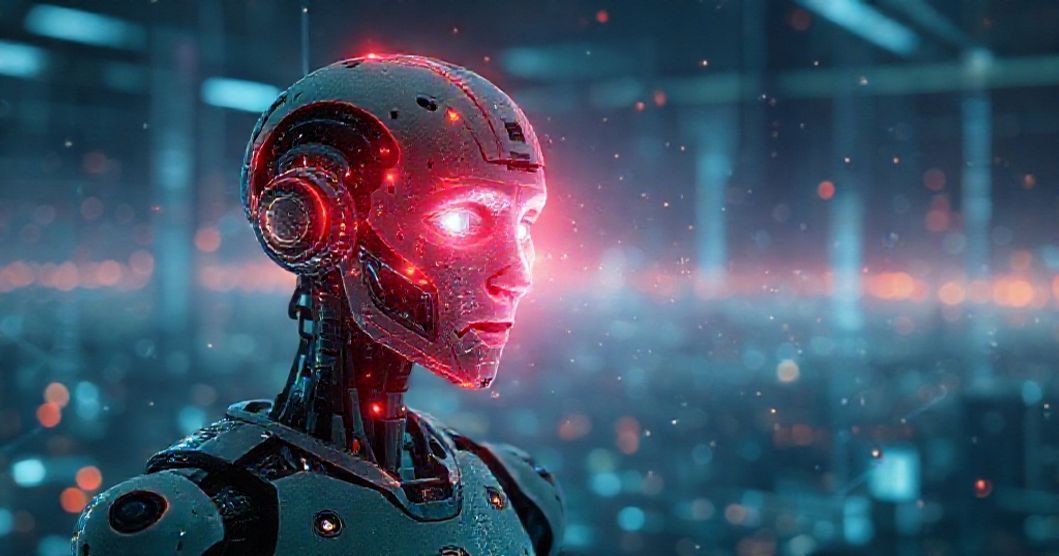
The Invisible Corrosion of Our Digital Foundation
Every organization, from multinational corporations to small businesses, relies on a vast array of hardware and software. Over time, components of this **network infrastructure** grow old. These "aging tech" elements, often referred to as **legacy systems**, might be routers, switches, servers, or even proprietary software that has been humming along quietly for years, perhaps even decades. They continue to perform their primary function, leading to a pervasive "if it ain't broke, don't fix it" mentality.
The Silent Threat of Legacy Systems
The problem, however, is that "not broke" doesn't mean "secure." As technology evolves, so do the methods of attack. Legacy systems often harbor unpatched vulnerabilities, overlooked backdoors, or simply lack the modern security features built into newer equipment. They might run outdated operating systems or firmware that no longer receive security updates. Furthermore, the expertise required to manage and secure these older systems often dwindles as personnel retire or move on, leaving a knowledge gap that **threat actors** can exploit.
Replacing this equipment requires significant **IT investment**, a cost that many organizations are hesitant to bear, especially when the old gear still functions. This hesitation creates a growing backlog of vulnerable points in our collective **digital body**, making organizations susceptible to **data breaches**, operational disruptions, and intellectual property theft. The sheer complexity of modern networks, coupled with years of patchwork additions, means that identifying and cataloging every piece of aging tech can be a monumental task, leaving many critical vulnerabilities unseen and unfixed.
Generative AI: The New Frontier for Digital Decay Exploitation
The rise of **Generative AI**, epitomized by tools like ChatGPT, marks a paradigm shift in the cybersecurity landscape. What once required highly specialized skills, deep technical knowledge, and considerable time, can now be significantly automated and accelerated by sophisticated AI algorithms. This is where the true danger lies: AI isn't just creating new threats; it's supercharging the exploitation of existing weaknesses, particularly those found in aging tech.
Democratizing Cyber Attacks
Generative AI lowers the barrier to entry for aspiring **cyber attackers**. Novices can now leverage AI to craft highly convincing phishing emails, generate malicious code, or even discover specific vulnerabilities in network equipment without needing extensive coding experience or advanced understanding of network protocols. AI can quickly parse vast amounts of information about known exploits, company structures, and individual targets, synthesizing personalized attack vectors at scale. This democratization means that the pool of potential attackers grows exponentially, making the defense more challenging.
Beyond Simple Automation: Adaptive Exploits
The threat extends beyond simple automation. AI can analyze network traffic, learn from defensive measures, and adapt its attack strategies in real-time. It can scour the internet for obscure documentation or forgotten forum posts about specific legacy hardware, identifying unique vulnerabilities that a human attacker might miss. Imagine an AI that can methodically test every possible configuration and exploit variant against an old router until it finds the single overlooked flaw, then automatically generate the code to breach it. This capability turns static, forgotten weaknesses into dynamic, actively hunted targets. The sheer processing power and pattern recognition abilities of AI enable it to identify and leverage these deep-seated flaws in ways that were previously impossible, dramatically increasing the risk of successful **cyber attacks** against our **digital infrastructure**.
The Real-World Impact: From Data Breaches to Infrastructure Collapse
The consequences of neglecting **aging tech** in an AI-amplified threat landscape are far-reaching and potentially catastrophic. Our "digital body" is not just about personal data; it encompasses the critical systems that underpin modern society.
Economic and Reputational Costs
For businesses, a successful **cyber attack** can lead to devastating **data breaches**, exposing sensitive customer information, financial records, or proprietary intellectual property. The financial repercussions include regulatory fines, legal costs, incident response expenses, and the direct cost of business interruption. Beyond the monetary loss, there's the irreparable damage to reputation and customer trust, which can take years to rebuild. The continuous need for **IT investment** to improve **security posture** is often underestimated until a major breach occurs.
National Security Implications
On a broader scale, the pervasive reliance on interconnected **network infrastructure** means that vulnerabilities in **aging tech** can pose significant national security risks. Critical infrastructure sectors – including energy grids, water treatment facilities, transportation networks, and healthcare systems – frequently utilize legacy control systems and equipment. An AI-powered attack on these systems could lead to widespread power outages, disruption of essential services, or even compromise patient safety in hospitals. This isn't science fiction; it's a growing concern for governments and cybersecurity agencies worldwide, demanding immediate attention to **cyber resilience** and **network modernization**. The health of our **digital body** is directly tied to national stability and safety.
Fortifying Our Digital Existence: A Call for Proactive Investment
Cisco's urgent alarm serves as a critical call to action. While the threat posed by AI-amplified exploitation of **aging tech** is undeniable, it is not insurmountable. It demands a paradigm shift from reactive patching to proactive, strategic **IT investment** in **cybersecurity** and **digital transformation**.
Prioritizing Network Modernization
The most direct solution is to systematically identify and replace **legacy systems** and **aging tech** across all networks. This isn't just about buying new hardware; it's about a comprehensive **network modernization** strategy that integrates advanced security features from the ground up. Regular audits of all **network equipment** are crucial to maintain an up-to-date inventory and identify potential weaknesses. This proactive approach to **risk management** helps to eliminate the low-hanging fruit that AI can so easily exploit.
Embracing AI for Defense, Not Just Offense
While AI amplifies the threat, it also offers powerful tools for defense. Organizations must leverage AI and machine learning for enhanced **threat detection**, automated vulnerability scanning, and predictive analytics. AI-driven security solutions can identify anomalous behavior, detect emerging attack patterns, and respond to threats far faster than human operators alone. Investing in AI-powered defensive capabilities is essential to match the evolving sophistication of AI-powered attacks. This means not just securing what we have, but building in intelligent defenses that can adapt and evolve.
A Culture of Continuous Security
Beyond technology, a robust **security posture** requires a continuous culture of security awareness and training. Employees are often the first line of defense, and understanding the evolving nature of threats, particularly those facilitated by AI, is vital. Regular security training, phishing simulations, and clear incident response plans are non-negotiable. Furthermore, organizations must embrace a mindset of continuous security improvement, constantly evaluating their **cyber resilience** and adapting their defenses to stay ahead of malicious actors. This holistic approach ensures that the "digital body" is not only robust but also capable of healing and evolving.
The Transhumanist Perspective: Our Extended Self at Risk
From a **transhumanist** perspective, our digital infrastructure is more than just tools; it is an integral extension of human capability and consciousness. Our digital identities, our stored memories, our communication channels, and even the smart devices that augment our physical senses – all form an intricate part of our extended "self." The decay of this **digital body** is not merely an inconvenience; it represents a fundamental threat to our collective evolution and potential.
If our **network infrastructure** becomes compromised or collapses due to unaddressed vulnerabilities exploited by advanced AI, it directly impacts our capacity for innovation, collaboration, and personal actualization. The promise of human-machine integration, of vastly expanded cognitive and sensory abilities through technology, hinges entirely on the security and reliability of that underlying tech. A decaying digital body, vulnerable to increasingly intelligent adversaries, can cripple this vision, halting progress and even rolling back the advancements we've already made. Securing our digital realm isn't just about protecting assets; it's about safeguarding the future of human experience in an ever-more integrated world.
Conclusion
The urgent alarm sounded by Cisco regarding **aging tech** and the amplifying power of **Generative AI** is a wake-up call we cannot afford to ignore. Our increasingly sophisticated **digital body**, which underpins our personal lives, economic stability, and national security, is vulnerable to a new breed of **cyber attacks**. The insidious decay of **legacy systems**, combined with AI's ability to ruthlessly exploit these weaknesses, presents an existential challenge to our connected world.
The solution, though costly, is imperative: proactive **IT investment** in **network modernization**, the adoption of AI-powered defensive **cybersecurity** measures, and fostering a pervasive culture of **cyber resilience**. By acknowledging the threat and committing to continuous vigilance, we can fortify our **digital infrastructure**, protect our collective "digital body," and ensure that the future of human-technology integration is built on a foundation of strength and security, rather than vulnerability and decay. The time for action is now, before the silent corrosion becomes an irreversible collapse.
