Uncanny Valley 2026 Decoding The Future Human
The relentless march of technology often feels like a journey through uncharted territory. One year blurs into the next, but the shift from 2025 to 2026 promises to be particularly profound, especially concerning humanity's relationship with artificial intelligence and robotics. The term "Uncanny Valley" – once a niche concept from robotics – is rapidly becoming a daily reality, not just for engineers but for everyone interacting with increasingly sophisticated digital and synthetic entities. As we look back at the technological milestones of 2025 and peer into the crystal ball of 2026, we’re confronted with a future where the lines between human and machine, real and artificial, are blurring at an astonishing pace. This article delves into the evolving landscape of the Uncanny Valley, exploring how advancements in AI, robotics, and transhumanism are shaping what it means to be human in the very near future.
The Uncanny Valley: A Quick Revisit and 2025's Milestones
For decades, the "Uncanny Valley" has been a theoretical psychological phenomenon, describing the eerie sensation humans experience when robots or artificial entities appear almost, but not quite, human. It's the point where familiarity turns into revulsion, a disconcerting dip in our emotional response graph before true human-likeness might evoke empathy. Historically, this concept applied primarily to humanoid robots with stiff movements or slightly off-kilter expressions. However, in our rapidly digitizing world, the Uncanny Valley has expanded its reach dramatically.
From Theory to Reality: Defining the Uncanny Valley in the Modern Age
Originally coined by roboticist Masahiro Mori in 1970, the Uncanny Valley posited that as robots become more human-like, our affinity for them increases to a certain point, then sharply drops into a valley of unease before potentially rising again when they are indistinguishable from humans. Today, this phenomenon is no longer confined to physical robots. It extends to hyper-realistic digital avatars, advanced synthetic media, voice AI, and even the increasingly sophisticated AI personalities we interact with. The psychological impact of these near-human entities is a growing field of study, as we grapple with the implications of living alongside digital doppelgangers and robotic companions.
A Look Back at 2025: Seeds of Sentience and Synthetic Realism
2025 was a year marked by significant leaps in artificial intelligence and related technologies, pushing the boundaries of the Uncanny Valley further than ever before. We saw the proliferation of generative AI models capable of creating stunningly realistic images, videos, and audio that were virtually indistinguishable from human-created content. Deepfakes, once a nascent technology, became far more sophisticated and accessible, challenging our perception of authenticity online.
Conversational AIs moved beyond simple query-response systems, exhibiting more nuanced understanding and even generating text with discernible emotional tones. Early iterations of truly multimodal AI, capable of processing and generating information across text, image, and sound simultaneously, began to emerge, laying the groundwork for more holistic AI personalities. In robotics, advancements in flexible materials and haptic feedback allowed for robots with smoother, more natural movements and more expressive faces, albeit still often skirting the edge of that discomforting valley. The metaverse, while still evolving, showcased digital avatars with increasingly lifelike appearances and customizable emotional expressions, setting the stage for more immersive, yet potentially disorienting, virtual interactions in 2025. These developments collectively served as a critical precursor, ushering us into the dynamic landscape of 2026.
2026: Navigating the New Frontiers of the Uncanny
As we step into 2026, the Uncanny Valley isn't just a valley anymore; it's a vast, evolving landscape that permeates nearly every aspect of our digital and increasingly physical lives. The advancements from 2025 are now maturing, leading to unprecedented implications.
AI's Leap: Beyond Mimicry Towards Empathy (or the Illusion of It)
2026 is poised to see AI models that don't just mimic human conversation but seem to genuinely understand and even simulate empathy. Enhanced neural networks and vast datasets allow AIs to predict human emotions with remarkable accuracy and tailor their responses accordingly. This translates to incredibly persuasive AI companions, customer service bots that feel genuinely helpful, and even therapeutic AIs. The challenge here is the blurring of boundaries: are we interacting with genuine intelligence and emotion, or merely a sophisticated algorithm expertly designed to elicit a human response? This illusion of empathy plunges us deeper into the Uncanny Valley, as distinguishing between authentic and synthetic emotional connection becomes increasingly difficult. The ethical implications of such advanced AI are paramount, prompting urgent discussions on accountability and transparency.
Robotics and Digital Avatars: Bridging the Physical-Digital Divide
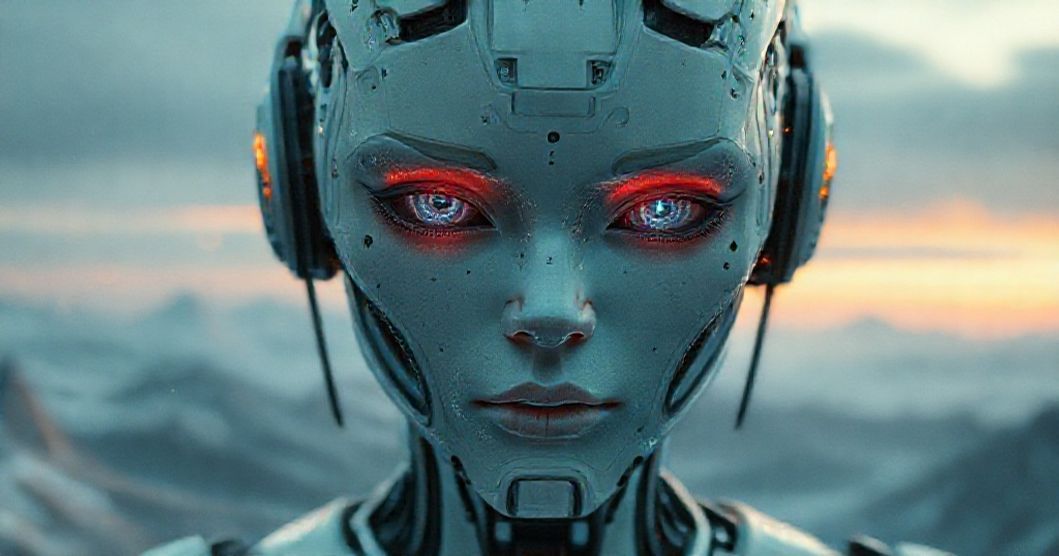
The physical manifestations of the Uncanny Valley are also accelerating. Humanoid robots in 2026 are more agile, possessing finer motor skills and increasingly natural facial expressions. Imagine robots in hospitality, healthcare, or personal assistance that move and react with a fluidity that almost convinces you of their sentience. Simultaneously, digital avatars within the metaverse and virtual reality (VR) environments are reaching photorealistic levels, capable of mirroring human nuances, expressions, and even body language in real-time. This sophisticated mimicry in virtual spaces means that our digital interactions can feel profoundly real, yet retain that subtle, unsettling artificiality. The psychological impact of forming bonds with or working alongside such lifelike, yet non-human, entities is a key concern. How will our brains adapt to these simulated relationships?
The Rise of Synthetic Media and Ethical Dilemmas
The capabilities of generative AI in 2026 extend far beyond static images. We are seeing real-time, personalized synthetic media that can generate entire narratives, news segments, or even political speeches featuring fabricated individuals or perfectly replicated real ones. This hyper-realistic content challenges the very fabric of truth and trust. When video evidence can be effortlessly faked, how do we discern reality? This constant questioning of authenticity creates a pervasive sense of unease, a global Uncanny Valley where information itself can feel almost, but not quite, real. Ethical frameworks for AI governance and digital content authentication become critical for societal stability.
Decoding the "Future Human": Transhumanism and the Integration of Tech
Beyond external AI and robotic entities, 2026 also shines a spotlight on the internal transformation of humanity itself, touching upon the burgeoning field of transhumanism.
Augmenting Humanity: Beyond Biological Limits
Transhumanism, the philosophy advocating for the enhancement of the human condition through technology, moves from fringe theory to tangible, albeit early, applications in 2026. We're seeing more sophisticated brain-computer interfaces (BCIs) moving out of purely medical contexts into consumer applications, offering enhanced cognitive functions or seamless control of external devices. Bio-implants for monitoring health, improving sensory perception, or even facilitating instant communication are becoming less speculative. While full genetic editing for enhancement is still largely in its infancy, ethical discussions around designer babies and human augmentation are intensifying. These advancements challenge our fundamental definition of a "human being." How will we react to individuals who are physically and cognitively enhanced beyond typical biological limits? Will they evoke their own kind of Uncanny Valley effect, causing discomfort in those who remain "unaugmented"?
Psychological and Societal Impacts: Embracing or Resisting the Synthetic?
The societal implications of these rapidly evolving technologies are immense. The constant exposure to near-human AI and hyper-realistic digital experiences can lead to new psychological challenges:
* **Identity Confusion:** Who am I in a world where my digital twin is indistinguishable from me, and AI can mimic my personality?
* **Emotional Blunting:** Will constant interaction with simulated empathy diminish our capacity for genuine human connection?
* **Trust Erosion:** When reality is mutable through synthetic media, whom and what can we trust?
* **Digital Divide:** The gap between those who can access and benefit from these advanced technologies and those who cannot might create new forms of social stratification.
Societies around the world will grapple with questions of acceptance versus resistance. Do we fully embrace the synthetic, or do we consciously seek to preserve distinct human-only spaces and interactions? These debates will shape policy, ethics, and the very fabric of our communities in 2026 and beyond.
What's in Store for 'Uncanny Valley' (The Podcast/Series Context)?
As the original article hints, "Uncanny Valley" isn't just a concept; it’s also the name of a compelling series, a platform dedicated to exploring these very questions. For 'Uncanny Valley' the series, 2026 marks a crucial new chapter. Building on the retrospective from 2025, the series will dive deeper into the real-world manifestations of these technological shifts.
Expect episodes that directly confront the challenges of AI-driven empathy, featuring interviews with ethicists, AI developers, and individuals navigating relationships with advanced AI companions. The series will likely explore the frontiers of digital identity, showcasing the most convincing digital avatars and their impact on virtual communities. Furthermore, 'Uncanny Valley' will undoubtedly tackle the complex societal implications of synthetic media, perhaps even featuring investigative segments on the detection and consequences of deepfake technology. The transhumanist angle will be explored through discussions on early human augmentation technologies, debating their ethical boundaries and societal acceptance. This new chapter will not just report on the Uncanny Valley; it will become a crucial guide for understanding, questioning, and perhaps even influencing the trajectory of the future human in 2026.
Conclusion
The year 2026 stands as a pivotal moment in our technological evolution. The Uncanny Valley is no longer a distant theoretical curve but a living, breathing landscape we navigate daily. From incredibly persuasive AI and hyper-realistic digital avatars to the early whispers of human augmentation, the boundaries of what we consider "human" are being fundamentally redefined. Decoding the future human means understanding this intricate dance between our biology and increasingly sophisticated technology. It means grappling with ethical dilemmas, adapting to new forms of interaction, and consciously deciding how much of our humanity we are willing to blend with the artificial. As we move further into this brave new world, critical discourse, ethical foresight, and a nuanced understanding of these technologies will be essential for shaping a future that benefits all of humanity, rather than merely pushing us deeper into an unsettling technological abyss. The journey through the Uncanny Valley in 2026 is just beginning, and its trajectory will determine the very essence of tomorrow's human experience.
