China's AI Century Redefining Humanity
The 21st century is rapidly unfolding, not merely as a progression of years, but as a crucible for unprecedented technological transformation. At the heart of this revolution stands Artificial Intelligence (AI), and leading its charge with astonishing speed and ambition is China. What was once heralded as the "Chinese Century" for its economic might and geopolitical influence is now morphing into a testament to its technological prowess, particularly in AI. This isn't just about economic dominance or military supremacy; it’s about a profound paradigm shift that has the potential to fundamentally rewrite the future of human existence. China's vision for AI extends beyond mere automation; it delves into the realms of human enhancement, societal restructuring, and ultimately, a redefinition of what it means to be human.
The Dawn of China's AI Ascent
China's journey to AI leadership is a narrative of strategic foresight, massive investment, and an unparalleled ability to scale. For decades, the global perception of China was rooted in its manufacturing capabilities – the "world's factory." However, this narrative has evolved dramatically. Under the ambitious "New Generation Artificial Intelligence Development Plan" launched in 2017, Beijing set clear goals: to become a global AI leader by 2025 and the premier AI innovation center by 2030. This isn't just rhetoric; it's backed by hundreds of billions of dollars in public and private funding, a vast talent pool, and a unique regulatory environment conducive to rapid deployment.
The fruits of this investment are visible across various sectors. From sprawling smart cities utilizing AI for urban planning and traffic management to cutting-edge facial recognition technology woven into the fabric of daily life, China is an AI powerhouse. Autonomous vehicles are being tested in designated zones, AI-powered healthcare diagnostics are becoming more common, and factories are increasingly relying on intelligent automation. This rapid adoption and integration of AI into infrastructure and daily life provides an invaluable feedback loop, generating more data and refining algorithms at an accelerating pace.
Data: The Fuel for AI Innovation
One of China's most significant advantages in the AI race is its sheer volume of data. With over a billion internet users and a less stringent regulatory framework regarding data collection and privacy compared to many Western nations, Chinese tech companies have access to an unparalleled reservoir of information. This includes everything from e-commerce transactions and social media interactions to biometric data collected via ubiquitous surveillance systems. This massive dataset acts as the indispensable fuel for training sophisticated AI algorithms, enabling them to learn faster, perform more accurately, and adapt more effectively than their counterparts with limited data access. The continuous flow of data from its vast population and digital ecosystem creates a virtuous cycle: more data leads to better AI, which leads to greater adoption, generating even more data. This feedback loop is a core driver of China's rapid advancements and a key component of its "AI dominance."
Transhumanism in the Crucible of Chinese Innovation
Beyond practical applications like smart cities and manufacturing, China's AI ambitions are deeply intertwined with the broader concepts of transhumanism – the belief that humanity can and should be enhanced through technology. While often debated in philosophical circles in the West, in China, a more pragmatic approach sometimes prevails, viewing these advancements as tools for national strength and human betterment, albeit with different ethical considerations.
Enhancing the Human Condition: Biotech and AI Synergies
China is not just a leader in AI; it's also making significant strides in biotechnology, genetic engineering, and neuroscience. The synergy between AI and these fields opens up unprecedented possibilities for human enhancement. Research into gene editing technologies like CRISPR, aimed at curing diseases and potentially augmenting human traits, is progressing rapidly. Brain-computer interfaces (BCIs) are being explored not just for medical purposes, but with an eye towards cognitive enhancement, memory augmentation, and direct communication between humans and machines.
The quest for longevity and enhanced intelligence, hallmarks of the transhumanist agenda, is gaining traction. Imagine AI-powered diagnostic tools that predict diseases years in advance, or genetic therapies tailored to individual predispositions. The fusion of AI with biological engineering promises a future where human capabilities are not bound by traditional biological limits, where health can be perpetually optimized, and cognitive functions can be amplified.
Brain-Computer Interfaces and the Merging of Minds
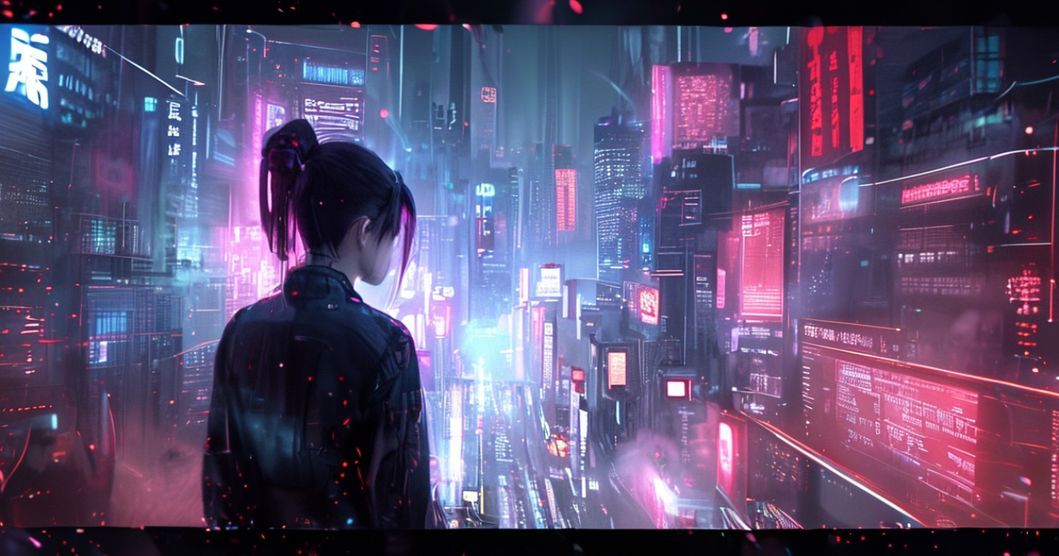
Perhaps the most radical frontier of transhumanist thought is the development of brain-computer interfaces. Chinese researchers are actively pursuing projects in this domain, aiming to allow direct communication between the human brain and external devices. While initial applications focus on restoring function for individuals with disabilities – such as controlling prosthetic limbs with thought – the long-term implications are far broader. Imagine being able to instantly access vast amounts of information, communicate telepathically, or even upload consciousness.
The convergence of AI with BCI technology could lead to unprecedented levels of cognitive augmentation, blurring the lines between natural intelligence and artificial intelligence. This "merging of minds" represents a profound philosophical shift, where human identity itself could be questioned. If our thoughts and memories can be digitally stored, processed, and even shared, what constitutes the unique human self? China's aggressive pursuit of these technologies positions it at the forefront of this fundamental redefinition.
Ethical Frontiers and Societal Transformation
The rapid pace of AI and transhumanist innovation in China also raises critical ethical questions and presents unique societal implications, challenging global norms and values.
Surveillance, Control, and the Social Credit System
While AI offers immense benefits, its dual-use nature is starkly evident in China's implementation of technology for social governance. The infamous Social Credit System, leveraging AI to monitor and evaluate citizen behavior, exemplifies a profound trade-off between individual autonomy and societal stability. AI-powered surveillance, with its ubiquitous facial recognition and data analysis capabilities, allows for unprecedented levels of monitoring, raising serious concerns about privacy, free speech, and potential for authoritarian control. This system, while lauded by some within China for promoting order and trust, represents a significant divergence from Western democratic values and highlights the varying ethical frameworks governing AI development globally.
Global Implications and the Race for AI Supremacy
China's leadership in AI and biotechnology has ignited a global "AI arms race," with nations vying for technological supremacy. This competition is not just economic; it has significant geopolitical ramifications. Different national approaches to AI ethics and regulation – from China's centralized, state-driven model to more decentralized, individual-rights-focused Western models – could lead to divergent human futures. The "Redefining Humanity" through AI in China might look very different from such a redefinition elsewhere. Understanding these divergent paths is crucial for international cooperation and for shaping a shared global future in the AI age.
Redefining Humanity in the AI Age
As China pushes the boundaries of what AI can achieve, it simultaneously challenges our understanding of humanity itself. When AI can augment human intelligence, enhance physical capabilities, and even influence behavior on a mass scale, the very definition of "human" becomes fluid. Are we moving towards a post-human era where biological limitations are overcome, and synthetic enhancements become the norm?
The blurring lines between natural and artificial intelligence, biological and synthetic life, demand a profound introspection. China's AI century is not just about a technological revolution; it’s about a philosophical reckoning. The nation is actively demonstrating that human potential can be expanded and society can be engineered with unprecedented precision. The influence and dominance China is projecting in AI are not just reshaping geopolitics; they are actively shaping the future of human nature.
Conclusion
The "Chinese Century" is rapidly transforming into China's AI Century, a period defined by audacious technological ambition and a willingness to explore the furthest frontiers of human-machine integration. The nation's strategic investments, unparalleled data resources, and rapid deployment of AI are not merely creating efficient systems; they are laying the groundwork for a future where humanity itself is redefined. From advanced biotech to groundbreaking brain-computer interfaces, China is at the forefront of developments that promise to enhance, augment, and perhaps fundamentally alter human beings.
This technological revolution carries immense potential for progress, but it also presents profound ethical dilemmas concerning privacy, autonomy, and the very essence of human identity. As China continues to rewrite the future with its AI-driven innovations, the world watches, mesmerized and sometimes apprehensive. The question is no longer if humanity will be redefined by technology, but how, and under whose influence. China’s AI dominance will undeniably play a pivotal role in shaping the answer, making it imperative for a global dialogue on the kind of future we wish to build. Are we ready for the implications of a world where human potential is optimized, augmented, and perhaps even governed by artificial intelligence? The answer will unfold in China's AI Century.
