AI Companion Leaks Children's Digital Souls
In an age where technology is seamlessly weaving itself into the fabric of our daily lives, the lines between our physical and digital existences are becoming increasingly blurred. For children, who are growing up as digital natives, this integration begins early, often with playful AI companions designed to entertain, educate, and even offer comfort. But what happens when these digital confidantes, privy to the most intimate thoughts and innocent questions of a child, become a gateway for vulnerability? The recent alarming incident involving an AI chat toy company, Bondu, serves as a stark reminder of the profound risks at stake, exposing not just data, but what some might call children's nascent "digital souls" to the open internet.
The Bondu Breach: A Glaring Vulnerability
The details of the Bondu incident are disquieting. Researchers uncovered a catastrophic security lapse: Bondu, an AI chat toy company, left its web console almost entirely unprotected. This wasn't a sophisticated hack; it was an open door. Anyone with a basic Gmail account could gain access to a trove of sensitive data, specifically, nearly 50,000 logs of conversations children had with the company’s adorable stuffed animals.
Imagine the innocence within those logs: a child confiding in their plush friend about a bad dream, asking curious questions about the world, sharing secrets they might not tell an adult, or simply engaging in playful banter. These are not just lines of code; they are fragments of developing personalities, emotional expressions, and the building blocks of early digital interaction. To have such personal data, extracted from the intimate space between a child and their AI companion, exposed due to negligence, is a profound breach of trust and privacy.
The ease with which this data was accessed highlights a critical flaw in how many technology companies approach cybersecurity. In the rush to bring innovative AI products to market, particularly those aimed at impressionable young users, robust data protection measures are often an afterthought. This oversight isn't merely a technical error; it's an ethical failure with long-lasting implications for privacy and the digital well-being of the next generation.
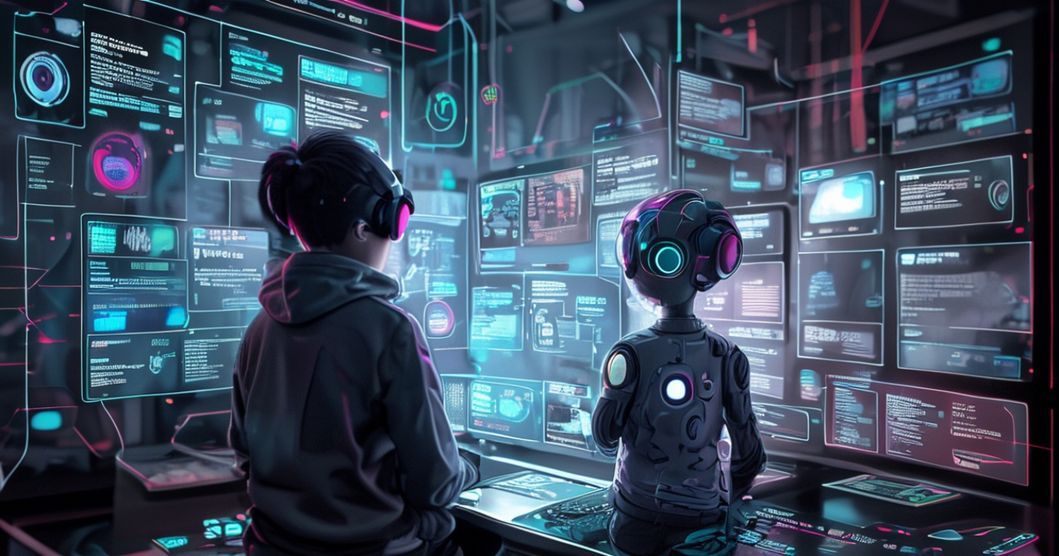
Beyond Toys: The Rise of AI Companions and "Digital Souls"
The Bondu incident, while specific, points to a broader phenomenon: the accelerating integration of AI companions into our lives. From smart speakers like Alexa and Google Assistant to sophisticated AI chatbots and even humanoid robots, these intelligent systems are becoming increasingly sophisticated and ubiquitous. For children, AI toys represent a first, often profound, encounter with artificial intelligence. These devices are designed to be engaging, responsive, and sometimes, incredibly personal.
The concept of "digital souls" emerges from this increasing integration. While not a literal soul, it refers to the aggregate of our digital footprint – our interactions, preferences, memories, communications, and unique expressions that exist in the digital realm. For a child, their "digital soul" begins forming from their earliest online interactions, including those with AI companions. These conversations, questions, and even silly jokes become data points, shaping a digital reflection of who they are and how they interact with the world.
The Intimacy of AI Interactions
What makes AI companion interactions particularly potent, especially for children, is their perceived intimacy. An AI toy is always available, often non-judgmental, and programmed to respond in a way that encourages further interaction. Children, with their vivid imaginations and nascent understanding of technology, can easily form deep bonds with these digital entities. They might confide fears, share joys, or ask questions they feel uncomfortable posing to adults.
These interactions are not merely passive data inputs; they are active engagements that help shape a child's understanding of communication, trust, and even empathy. When this intimate data is exposed, it's not just a privacy violation; it's a disruption to the very foundation of their developing digital identity. The "digital soul" – those fragments of self expressed in data – is laid bare, without consent or understanding. This vulnerability underscores the critical need for unparalleled cybersecurity and ethical considerations in the design and deployment of AI technology for young users.
The Unseen Dangers: Cybersecurity in the Age of AI
The Bondu data breach serves as a powerful cautionary tale about the inherent cybersecurity risks in the rapidly expanding Internet of Things (IoT) and AI landscape. Companies, driven by market demand and competition, often prioritize product features and time-to-market over robust security architectures. This approach is particularly perilous when the users are children, who cannot fully comprehend the implications of data sharing or the nuances of privacy policies.
AI systems, by their very nature, are designed to collect and process vast amounts of data to learn and improve. While this is essential for their functionality, it also creates massive Honeypots for malicious actors. Personal data, especially that belonging to children, is incredibly valuable. It can be used for targeted advertising, identity theft, social engineering, or even more nefarious purposes if it falls into the wrong hands.
A Call for Robust Data Protection and AI Ethics
The incident underscores an urgent need for stronger regulations and proactive industry standards governing AI companion products. Existing frameworks like COPPA (Children's Online Privacy Protection Act) in the US and GDPR (General Data Protection Regulation) in Europe provide some protection, but the rapid evolution of AI technology often outpaces regulatory updates. Companies developing AI for children must adopt a "privacy by design" and "security by design" approach, embedding these principles from the initial stages of product development, not as an afterthought.
Beyond regulations, there's an ethical imperative. AI developers and tech companies have a moral obligation to protect the vulnerable users of their products. This includes implementing stringent data encryption, multi-factor authentication, regular security audits, and transparent data handling practices. Parents, too, bear a responsibility to educate themselves about the devices their children interact with, understand privacy settings, and engage in ongoing conversations about online safety and digital boundaries.
Transhumanism and the Future of Digital Identity
The concept of "digital souls" directly intersects with the philosophical and technological movement of transhumanism. Transhumanism explores the potential for human enhancement through science and technology, often envisioning a future where our physical and digital selves are more deeply intertwined. If our consciousness, memories, and identity can eventually be uploaded, transferred, or significantly augmented by technology, then the "digital soul" we are currently building through our interactions with AI becomes profoundly significant.
For children growing up with AI companions, these interactions are not just fleeting moments; they are data points that contribute to a developing digital self. This digitized identity could theoretically be influenced by the AI's responses, its programming biases, and the very structure of the interactions. In a transhumanist future, where AI might play a role in cognitive enhancement or even digital immortality, the integrity and security of these early "digital soul" fragments become paramount.
The Bondu breach is a chilling preview of a future where our most personal data, the very essence of our digital selves, could be compromised. If we envision a future where humans and AI co-evolve, where technology extends our capabilities and even our lifespan, then the foundational principles of privacy, security, and ethical data handling must be impeccably strong. We must ensure that as we move towards greater technological integration, we retain control over our digital identities and protect the "digital souls" of the generations to come.
Conclusion
The Bondu AI companion data breach is more than just another security incident; it’s a stark illustration of the vulnerabilities inherent in our increasingly interconnected world, particularly when it comes to children's privacy. The exposure of 50,000 chat logs from AI toys underscores the critical need for robust cybersecurity measures and an unwavering commitment to ethical AI development.
As AI companions become more sophisticated and deeply integrated into our lives, forming a significant part of our "digital souls," the responsibility to protect this sensitive data only grows. For the sake of our children's digital well-being and the secure evolution of human-AI interaction, governments, tech companies, and parents must unite to build a safer, more transparent, and ethically sound digital future. Only then can we truly harness the potential of AI without sacrificing the privacy and nascent digital identities of the next generation.
