AI Frees Humanity From Cursed Work: The Digital Emancipation
The history of humanity is, in many ways, the history of work. From the dawn of agriculture to the industrial revolution, our lives have been defined by the tasks we undertake to survive, build, and progress. Yet, embedded within this narrative is a recurring, often unspoken, element: "cursed work." These are the jobs that are not merely arduous but soul-crushing, repetitive, emotionally draining, and fundamentally unfulfilling. They are the tasks that humanity endures out of necessity, leaving little room for creativity, self-actualization, or genuine purpose. But what if this age-old burden is finally being lifted? What if the relentless march of artificial intelligence (AI) is not merely automating tasks, but initiating a profound digital emancipation, freeing us from the shackles of cursed labor and opening doors to unprecedented human potential?
Automating the Unenviable: The Rise of AI in "Cursed" Sectors
For centuries, certain jobs have been universally dreaded. Think of the monotonous assembly line, the thankless customer service role, or the emotionally taxing positions that require constant confrontation. These are the front lines where human spirit often falters, leading to burnout, high turnover, and a pervasive sense of disengagement. Now, a silent revolution is underway, powered by advanced AI and machine learning, targeting precisely these unenviable roles.
The Debt Collector Dilemma: A Case Study in AI's Invasion
Consider the world of debt collection. It’s a job fraught with stress, hostility, and a constant battle against human resistance. For the human debt collector, each call can be an emotional gauntlet, often leading to mental health challenges and moral fatigue. For the person on the other end, it’s an invasion of privacy, a source of anxiety, and a constant reminder of financial strain. It’s a prime example of "cursed work" from both perspectives.
Yet, this deeply human, often painful, interaction is rapidly being automated. Companies are in a "mad dash" to deploy AI-powered debt collectors. Soon, if you have an unpaid bill, the voice on the other end of the line might not be human at all, but an advanced algorithm. This AI isn't susceptible to emotional abuse, doesn't feel guilt, and can handle an exponential volume of calls with unwavering persistence. While concerns about empathy and negotiation strategies remain, the efficiency and cost-effectiveness are undeniable. This shift, while initially unsettling, represents a significant step towards removing humans from one of the most hated and emotionally demanding jobs.
Beyond Debt Collection: Identifying Other Cursed Jobs
The implications extend far beyond debt collection. We can identify countless other roles ripe for AI takeover, roles that fit the "cursed work" description:
* **Routine Call Center Operations:** Answering frequently asked questions, processing standard requests, and navigating complex bureaucratic systems can be handled by conversational AIs and chatbots, freeing human agents for more complex, empathetic, and problem-solving interactions.
* **Data Entry and Administrative Tasks:** Repetitive inputting of information, scheduling, and document management are perfect candidates for robotic process automation (RPA) and intelligent automation, eliminating mind-numbing manual labor.
* **Quality Control and Surveillance:** AI-powered computer vision can monitor production lines for defects or security footage for anomalies with far greater consistency and tireless vigilance than human operators, reducing eye strain and boredom.
* **Certain Logistical and Repetitive Manufacturing Tasks:** While highly skilled manufacturing remains, many purely repetitive assembly or sorting tasks are increasingly being handled by industrial robots and AI, enhancing efficiency and safety.
These are tasks that require minimal creativity, critical thinking, or emotional intelligence—precisely the areas where AI excels. By offloading these burdens, AI promises a future where human effort can be redirected to more meaningful endeavors.
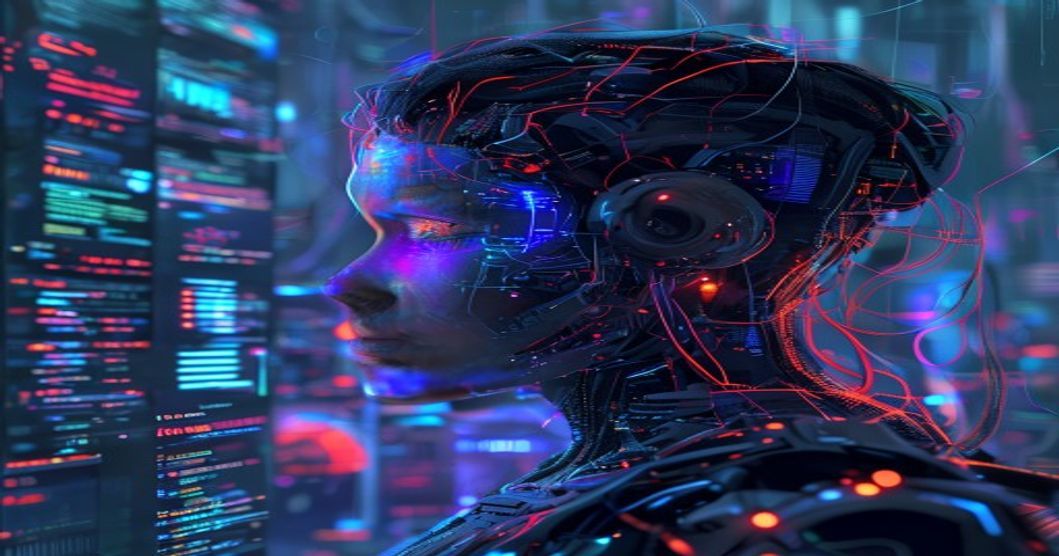
The Promise of Digital Emancipation: What Happens When AI Takes Over?
The concept of "digital emancipation" isn't merely about job displacement; it's about redefining the very nature of human engagement with work and society. It suggests a future where technological advancement liberates humanity from drudgery, allowing us to pursue higher forms of existence.
Reclaiming Human Potential and Creativity
When AI takes over repetitive, cursed work, a vast reservoir of human potential is unleashed. Imagine a society where people are no longer forced into jobs they hate simply to survive. Instead, individuals could dedicate their time and energy to:
* **Creative Pursuits:** Art, music, writing, design, and other forms of expression could flourish as hobbies become viable career paths.
* **Innovation and Problem Solving:** With more time for critical thinking and collaboration, humanity could tackle grand challenges in science, medicine, and engineering with renewed vigor.
* **Interpersonal Roles:** Jobs requiring genuine empathy, complex negotiation, teaching, caregiving, and community building would become even more valuable, emphasizing unique human strengths.
* **Lifelong Learning and Skill Development:** Continuous education would become a norm, fostering intellectual growth and adaptability.
This shift moves us towards a "purpose-driven society" where meaning and contribution are paramount, rather than mere transactional labor.
The Transhumanist Horizon: Redefining Human Endeavor
This digital emancipation aligns powerfully with transhumanist ideals. Transhumanism, at its core, is the philosophy that humanity can and should improve itself through science and technology, both physically and cognitively. While often associated with biological enhancements, freeing humans from mentally and emotionally taxing labor is a profound cognitive enhancement in itself.
By offloading cursed work to AI, we effectively enhance our collective cognitive capacity. We gain time and mental bandwidth to focus on:
* **Scientific Exploration:** Delving deeper into the mysteries of the universe.
* **Philosophical Inquiry:** Grappling with fundamental questions of existence and ethics in an AI-driven world.
* **Personal Growth:** Achieving a higher state of self-awareness and fulfillment.
AI, in this context, becomes an extension of our collective intellect, a tool not just for doing, but for *being* more human, more curious, more engaged with the vast potential of existence. It moves us closer to a post-scarcity future where basic needs are met, allowing for intellectual and existential flourishing.
Navigating the Transition: Challenges and Opportunities
No revolution is without its complexities. While the vision of digital emancipation is compelling, the transition will require careful planning and ethical consideration.
The Specter of Job Displacement and Economic Upheaval
The most immediate concern is widespread job displacement. As AI automation accelerates, many jobs that currently employ millions will simply cease to exist in their current form. This necessitates:
* **Massive Reskilling and Upskilling Initiatives:** Governments, educational institutions, and businesses must collaborate to equip the workforce with new skills relevant to an AI-augmented economy, focusing on creativity, critical thinking, emotional intelligence, and human-AI collaboration.
* **Rethinking Economic Models:** Concepts like Universal Basic Income (UBI) are gaining traction as potential safety nets, ensuring that all citizens have their basic needs met even if traditional employment models drastically change. This allows individuals the freedom to retrain, pursue passions, or contribute to society in non-traditional ways.
* **Entrepreneurial Spirit:** Automation can also lower barriers to entry for new businesses, fostering an era of unprecedented entrepreneurship as individuals leverage AI tools to create value.
Ethical AI and Societal Adaptation
The deployment of AI in sensitive areas like debt collection also raises crucial ethical questions:
* **Bias in Algorithms:** AI systems must be carefully designed to avoid perpetuating or amplifying existing societal biases. Fair and equitable treatment is paramount.
* **Transparency and Accountability:** Who is accountable when an AI makes a critical decision, especially in sensitive financial or legal contexts? Clear regulatory frameworks are essential.
* **The Nature of Human Connection:** As AI takes over more transactional interactions, how do we ensure that human beings maintain meaningful connections and do not become isolated? The emphasis shifts to quality, not quantity, of human interaction.
* **Psychological Impact:** How will society adapt to a world where "work" as a central identifier shifts? Ensuring mental well-being and purpose in a less work-centric world will be a key challenge.
The Future Isn't Jobless, It's Human-Augmented
It's crucial to understand that AI doesn't spell the end of human work, but rather its transformation. The future is not one of a jobless society, but of a *human-augmented* society. AI will become a powerful tool, an intelligent assistant that amplifies human capabilities, allowing us to achieve more with less drudgery.
We will see a proliferation of jobs requiring uniquely human traits: empathy, artistic vision, complex ethical reasoning, leadership, and the ability to build meaningful relationships. Human-AI collaboration will be the norm, where AI handles the data crunching and repetitive execution, while humans provide the strategic direction, creative spark, and emotional intelligence. This symbiotic relationship will unlock unprecedented levels of productivity and innovation, redirecting human energy towards the truly human elements of existence.
Conclusion: Embracing a Post-Work Paradigm
The automation of "cursed work" by AI represents a pivotal moment in human history—a digital emancipation that promises to free us from the age-old burdens of drudgery and unfulfilling labor. While the transition will undoubtedly present significant challenges, from job displacement to ethical dilemmas, the potential for a more creative, purposeful, and self-actualized humanity is immense.
As AI takes over the world's most hated calls and monotonous tasks, it allows us to reclaim our time, our energy, and our inherent human drive to explore, innovate, and connect. The future is not about AI replacing humanity, but about AI empowering humanity to evolve beyond the necessities of cursed work. It is an invitation to embrace a new paradigm, where technology serves as the ultimate liberator, paving the way for a truly transformed human experience and a vibrant, purpose-driven future. The digital emancipation is upon us, and with careful foresight, it promises to be the greatest gift technology has ever bestowed.
