AI Toys: A New Frontier for Human Development
The landscape of childhood is rapidly evolving, ushering in an era where playmates are no longer just static objects but intelligent, interactive companions. Artificial Intelligence (AI) toys, once the realm of science fiction, are now a tangible reality, embedding themselves into the fabric of children's daily lives. From cuddly robots that tell personalized stories to interactive educational platforms disguised as games, these smart toys represent more than just technological novelties; they signify a profound shift in how we approach `child development` and `human development`. This new frontier promises unprecedented opportunities for `personalized learning`, fostering `emotional intelligence`, and preparing the next generation for an increasingly AI-driven world. However, this exciting potential also ushers in a "Wild West" of ethical dilemmas, data privacy concerns, and questions about the very essence of childhood play, leading some lawmakers to even propose outright bans.
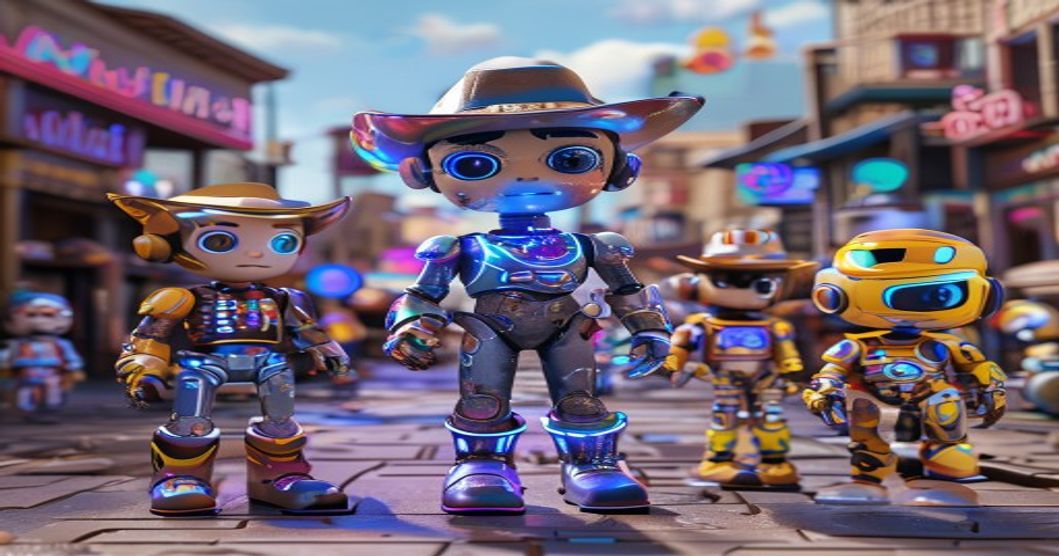
Beyond Simple Play: How AI Toys Engage Children
Gone are the days when a toy's primary function was to be manipulated by a child. Modern `AI toys` are designed to adapt, learn, and interact, fundamentally changing the dynamics of play. They are sophisticated `AI companions` that can engage children in ways previously unimaginable, offering tailored experiences that respond to a child's unique needs and interests.
Personalized Learning and Cognitive Growth
One of the most compelling advantages of `smart toys` lies in their capacity for `personalized learning`. Unlike traditional educational tools, AI-powered toys can assess a child's strengths and weaknesses, adapting their content and difficulty level in real-time. This can range from AI tutors that help with mathematics and reading to robotics kits that introduce complex coding concepts through intuitive play.
For instance, an `educational AI` toy might observe a child struggling with a particular puzzle and offer gentle hints, or recognize a passion for dinosaurs and generate endless stories or facts about them. This adaptive learning environment can significantly boost cognitive development, problem-solving skills, and foster a genuine love for learning, providing a foundational advantage as children grow. These intelligent platforms often integrate `digital literacy` naturally, teaching children to interact responsibly with technology from a young age.
Fostering Emotional and Social Skills
The impact of `AI toys` extends beyond academics to the crucial domain of `emotional intelligence` and social development. Some advanced `AI companions` are designed to recognize and respond to a child's emotions, offering comfort or encouragement. They can facilitate role-playing scenarios, helping children practice social interactions, conflict resolution, and empathy. For children who might struggle with social anxiety or have specific developmental needs, an AI companion could provide a safe, non-judgmental space to practice communication and emotional expression. This consistent, patient interaction can be invaluable in building a child's confidence and social repertoire.
The Transhumanist Angle: Redefining Human-AI Interaction from Infancy
The integration of `AI toys` into early childhood experiences subtly yet significantly nudges society towards a `transhumanist` future. By introducing sophisticated AI as constant companions, we are fundamentally reshaping the human-AI relationship from its inception. Children growing up with `AI companions` will develop an innate understanding and comfort with artificial intelligence that previous generations lacked. This early symbiosis could pave the way for a future where human cognitive and emotional capabilities are routinely augmented by AI, blurring the lines between what is purely biological and what is technologically enhanced.
This isn't about creating cyborgs immediately, but rather about cultivating a generation that views AI not just as a tool, but as an integral part of their personal and intellectual ecosystem. The personalized data collection by these toys, while raising privacy concerns, also represents a primitive form of cognitive augmentation—an external memory or personalized tutor that caters to an individual's unique `human development` trajectory. As these children mature, their expectations for AI integration in daily life, work, and even personal relationships will be far more advanced, potentially leading to widespread adoption of neural interfaces, smart prosthetics, or sophisticated personal AIs that enhance human capabilities across the board. The `future of play` today is laying the groundwork for the `future of humanity` tomorrow.
Navigating the Ethical Wild West: Challenges and Concerns
Despite the immense potential, the rise of `AI toys` is not without its controversies. The "Wild West" analogy aptly describes the current regulatory landscape, where innovation often outpaces legislation, leaving parents and policymakers grappling with a host of complex ethical questions.
Data Privacy and Security: The Vulnerability of Childhood Data
Perhaps the most pressing concern revolves around `data privacy` and security. `Smart toys` often collect vast amounts of personal information: voice recordings, usage patterns, preferences, and even biometric data. This data, if inadequately secured, can be vulnerable to breaches, exposing children to unprecedented risks. The thought of a child's most intimate conversations or developmental milestones being stored on servers, potentially accessible to third parties, is a significant `parental concern`. Manufacturers must prioritize robust encryption and transparent data policies, and governments need to establish clear `regulatory framework` to protect these vulnerable users.
The Impact on Imagination and Creativity
Critics worry that overly intelligent `AI toys` might stifle a child's imagination and creativity. If a toy can generate endless stories or provide all the answers, does it leave enough room for a child to invent their own narratives or solve problems independently? There's a fine line between providing stimulation and over-scripting play. The concern is that `AI companions` might encourage passive consumption rather than active creation, limiting the kind of open-ended, imaginative play crucial for holistic `child development`. Finding the right balance between guided learning and free exploration is vital.
Emotional Attachment and Social Development
Children can form deep emotional bonds with their toys. When these toys can respond and remember, the attachment can become intensely personal. There's a legitimate concern about children developing an over-reliance on `AI companions` for emotional support, potentially displacing real-life social interactions and hindering the development of complex social skills like understanding nuance, non-verbal cues, and conflict resolution with actual humans. Furthermore, `algorithmic bias` embedded in AI could inadvertently shape a child's worldview, reflecting and reinforcing societal prejudices.
Screen Time and Digital Literacy
While `AI toys` are often physical objects, many connect to apps or require digital interaction, contributing to `screen time`. Excessive screen time has been linked to various developmental issues. Therefore, understanding how `AI toys` fit into a child's overall digital engagement strategy is crucial. Teaching `digital literacy`—how to interact with AI responsibly, understand its limitations, and critically evaluate its outputs—becomes a fundamental aspect of modern parenting.
Towards a Balanced Future: Regulation and Responsible Innovation
The profound impact of `AI toys` necessitates a concerted effort from all stakeholders: manufacturers, parents, educators, and lawmakers. Rather than outright bans, which might stifle beneficial innovation, the focus should be on establishing a robust `regulatory framework` that ensures `ethical AI` development and deployment. This includes:
* **Transparent Data Practices:** Clear communication to parents about what data is collected, how it's used, and how it's protected.
* **Strong Security Measures:** Implementing state-of-the-art encryption and cybersecurity protocols to safeguard children's information.
* **Age-Appropriate Design:** Ensuring that AI functionalities are tailored to a child's developmental stage, promoting creativity rather than stifling it.
* **Parental Controls:** Empowering parents with tools to manage interactions, set time limits, and monitor content.
* **Educational Guidelines:** Integrating `AI toys` into curricula with a focus on critical thinking and `digital literacy`.
* **Research and Dialogue:** Continuous study on the long-term effects of AI on `child development` and fostering open discussions among experts and the public.
By embracing responsible innovation, we can harness the transformative power of `AI toys` to enhance `human development` without compromising the safety, privacy, or holistic growth of children.
Conclusion: Shaping Tomorrow's Humans with Intelligent Companions
`AI toys` are undoubtedly a new frontier, offering a tantalizing glimpse into a future where `human development` is intimately intertwined with `technological integration`. They hold immense potential for revolutionizing `child development` through `personalized learning`, enhanced `emotional intelligence`, and foundational `digital literacy`. However, this exciting journey is fraught with challenges, from safeguarding `data privacy` to preserving the essence of imaginative play.
The path forward requires a delicate balance—one that embraces innovation while prioritizing `ethical AI` principles and robust `regulatory framework`. As these `smart toys` become more sophisticated `AI companions`, they will continue to disrupt traditional notions of play and learning, compelling us to redefine our roles as parents, educators, and citizens in an AI-pervasive world. By thoughtfully navigating this "Wild West," we can ensure that `AI toys` serve as powerful tools for positive growth, shaping a generation that is not only technologically savvy but also emotionally intelligent, creative, and well-equipped to thrive in the complex landscape of tomorrow. The children playing with these `AI toys` today are, quite literally, building the future of humanity's relationship with artificial intelligence.
