AI's Next Evolution Vulnerable Undersea
The promise of Artificial Intelligence (AI) paints a breathtaking vision of the future. From revolutionizing healthcare and transportation to transforming economies and redefining human potential, AI is rapidly evolving from a futuristic concept into a tangible reality. Entire industries are being reimagined, and nations are racing to become leaders in this new technological frontier. Yet, this incredible leap forward, this "next evolution" of AI, rests upon a foundation that is surprisingly fragile and often overlooked: the vast, intricate network of undersea data cables. As regions like the Gulf experience an unprecedented AI boom, the vulnerability of this critical internet infrastructure is becoming an increasingly urgent concern, raising the stakes for global connectivity and technological progress.
The Dawn of AI's Golden Age
We are undoubtedly living through a golden age of AI development. Generative AI models like ChatGPT and Stable Diffusion have captured the public imagination, demonstrating capabilities once thought impossible. Behind these impressive applications lies an immense ecosystem of machine learning algorithms, deep learning neural networks, and colossal datasets. Training these sophisticated AI models requires unfathomable amounts of data, processed by hyperscale data centers that consume vast computational resources.
The subsequent deployment and real-time operation of AI services – from autonomous vehicles making split-second decisions to complex financial algorithms processing market data – demand constant, low-latency, and high-bandwidth connectivity. This insatiable hunger for data and uninterrupted communication is the lifeblood of AI's continued advancement. Without robust, reliable global connectivity, the potential of AI, no matter how advanced its algorithms, remains severely constrained.
The Unseen Lifelines: Undersea Cables and Global Connectivity
For most users, the internet feels like a ubiquitous, ethereal cloud. In reality, the vast majority – over 99% – of international data transmission doesn't travel wirelessly through satellites but through an intricate web of fiber optic cables laid across ocean floors. These *undersea data cables*, often no thicker than a garden hose, are the true *internet infrastructure* backbone, carrying everything from email and video calls to cloud computing data and financial transactions.
These *fiber optic cables* are engineered to withstand immense pressures and often span thousands of kilometers, connecting continents and enabling our modern, interconnected world. Their capacity is immense, far surpassing that of satellite communication for sheer volume and speed. They are the silent, unseen heroes enabling *global connectivity* and the seamless flow of information that powers everything from our social lives to our most advanced scientific endeavors, including the rapid *AI development* we witness today.
The Gulf's AI Ambition Meets Infrastructure Reality
The Gulf region, particularly countries like the UAE and Saudi Arabia, has embarked on an ambitious journey of *digital transformation* and economic diversification. Recognizing the strategic importance of AI, these nations are heavily investing in research, talent, and infrastructure to establish themselves as leading hubs for *Middle East technology* and *AI innovation*. Massive *hyperscale data centers* are being built, and government initiatives are fostering an environment ripe for an *AI boom*.
However, this rapid ascent brings into sharp focus a critical challenge: the *undersea cable problem*. The existing network, while functional, faces increasing pressure from the exponentially growing data demands of AI. Hyperscalers, the giants of cloud computing like Google, Amazon, and Microsoft, are at the forefront of this push, demanding more resilient and diverse *internet backbone* infrastructure. Their massive operations and commitment to the region's *AI development* require uninterrupted, ultra-low-latency data pathways, making the current vulnerabilities a significant concern.
Why Undersea Cables Are Vulnerable
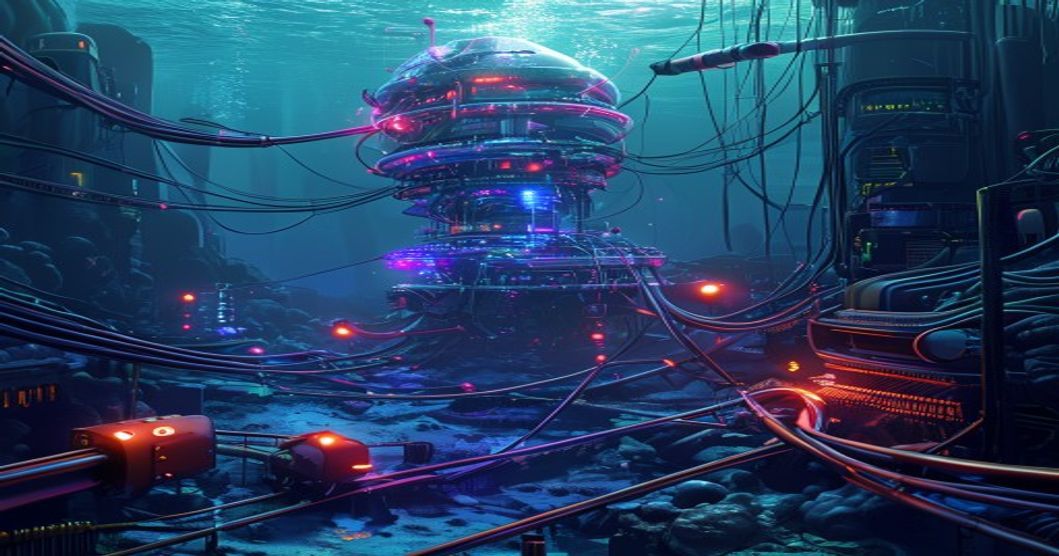
Despite their robust design, *undersea data cables* are far from indestructible. They face a range of threats that can lead to costly and disruptive outages:
* **Natural Disasters:** Earthquakes, volcanic activity, powerful underwater currents, and tsunamis can sever cables. The seismic activity in many parts of the world, including critical junctions for global cables, poses a constant threat.
* **Human Activity:** Unintentional damage from fishing trawlers dragging nets or ship anchors dropping is the most common cause of cable breaks. While less frequent, deliberate sabotage remains a geopolitical concern, especially for critical national *internet infrastructure*.
* **Wear and Tear:** Over time, the protective layers of cables can degrade due to erosion, marine life, and continuous stress, making them more susceptible to damage.
When a cable breaks, the immediate impact can range from increased latency and slower internet speeds to complete service outages in affected regions. The economic cost of repairs, data rerouting, and lost productivity can be immense, impacting businesses, governments, and everyday citizens.
Hyperscalers' Push for Resilient Infrastructure
The world's leading *hyperscalers* are not just consumers of internet infrastructure; they are also significant investors and drivers of its evolution. Their multi-billion-dollar *cloud computing* and *data center* operations require absolute *network resilience* and *redundancy*. For these companies, whose services underpin countless businesses and applications globally, any disruption translates directly into massive financial losses and reputational damage.
Consequently, these tech giants are actively advocating for and investing in new, diversified *undersea cable* routes, especially in emerging AI hubs like the Gulf. They understand that the future of *AI development* hinges on an internet that is not just fast, but also incredibly robust and resistant to outages. Their influence is pushing governments and local telecommunication providers to rethink and reinforce their *internet infrastructure* strategies, moving beyond mere capacity to focus on genuine resilience.
The Stakes for AI's Next Evolution
The vulnerability of *undersea cables* directly threatens the fundamental building blocks of *AI's next evolution*:
* **Crippled Data Flow:** AI models, particularly those for *deep learning* and *machine learning*, thrive on continuous streams of high-volume, high-velocity data. Interruptions to these critical *data transmission* pathways can halt training, degrade real-time AI performance, and severely impact the reliability and safety of AI systems. Imagine an autonomous vehicle relying on cloud-based AI making a decision based on delayed or incomplete data due to a cable cut.
* **Economic Impact and Innovation Slowdown:** Nations and companies investing heavily in AI risk significant economic setbacks if their *critical infrastructure* is compromised. Slowed *AI development*, reduced competitive advantage, and loss of investor confidence can stifle innovation and hinder the realization of AI's economic benefits.
* **Geopolitical Implications:** *Undersea data cables* are not just economic assets; they are strategic national infrastructure. Disruptions, whether accidental or malicious, can have significant geopolitical ramifications, impacting national security, intelligence gathering, and international relations. The control and protection of these digital lifelines are increasingly becoming matters of state.
* **AI Ethics and Safety:** The discussion around *AI ethics* and *AI safety* often focuses on algorithmic bias or misuse. However, a less reliable underlying *internet infrastructure* can lead to AI systems that are inherently less trustworthy and more prone to errors, irrespective of their internal design. Ensuring the physical robustness of the internet is a silent but crucial aspect of responsible AI deployment.
Strategies for a Resilient AI Future
To secure *AI's next evolution* and protect our increasingly digital world, proactive and comprehensive strategies are essential:
* **Diversification of Routes and Landing Points:** Laying new *undersea cable* routes that follow different paths and land at geographically diverse points reduces the risk of a single incident causing widespread disruption. The Gulf region, with its strategic location, is becoming a nexus for new routes connecting East and West.
* **Advanced Monitoring and Maintenance:** Investing in cutting-edge technologies for real-time monitoring of cable health, using autonomous underwater vehicles (AUVs) for inspections, and implementing rapid-response repair protocols are crucial for minimizing downtime.
* **Investment in Complementary Technologies:** While *fiber optic cables* remain paramount, exploring and investing in complementary technologies like Low Earth Orbit (LEO) satellite constellations (e.g., Starlink, OneWeb) can provide some degree of backup and redundancy, especially in remote areas or during major cable outages, though their capacity for core internet traffic remains limited compared to cables.
* **International Cooperation and Collaboration:** Building resilient *global connectivity* requires collaboration between nations, telecommunications companies, and *hyperscalers*. Sharing intelligence on threats, coordinating repair efforts, and jointly investing in new infrastructure are vital.
* **Robust Regulatory Frameworks:** Governments must establish clear regulatory frameworks that encourage private investment in *critical infrastructure*, streamline permitting processes for new cable projects, and implement strong protection measures for existing *submarine cables*.
Conclusion
The dazzling ascent of Artificial Intelligence promises to redefine humanity's future, propelling us into an era of unprecedented innovation and capability. Yet, this remarkable journey into *AI's next evolution* is inextricably linked to the physical threads that bind our digital world: the vast, vulnerable network of *undersea data cables*. As regions like the Gulf emerge as pivotal players in the global *AI boom*, the imperative to secure and fortify this critical *internet infrastructure* has never been greater.
The challenge is clear: AI's insatiable demand for data, coupled with the inherent vulnerabilities of *undersea cables*, presents a significant risk to continued progress. However, by embracing strategic investments in *network resilience*, fostering international cooperation, and leveraging advanced technologies for monitoring and maintenance, we can build a more robust foundation for our digital future. The future of AI isn't just about algorithms and data centers; it's profoundly about the physical arteries of information that connect them. Safeguarding these unseen lifelines is paramount to ensuring that AI's promise can truly be realized, empowering a future that is not only intelligent but also reliably connected.
