Bostrom's AI Blueprint: Humanity's Tech Retirement
Imagine a future where the grand challenges that have plagued humanity for millennia—disease, poverty, conflict, and even the limitations of our own biology—are not just mitigated but utterly eliminated. This isn't the stuff of science fiction alone; it's a future thoughtfully contemplated by one of the world's most influential contemporary philosophers, Nick Bostrom. The director of Oxford University's Future of Humanity Institute, Bostrom has spent decades exploring the most profound existential risks and potential triumphs facing our species. Central to his vision is the strategic development of advanced Artificial Intelligence (AI) as the key to unlocking what he provocatively calls a "solved world" and ushering in humanity's "big retirement."
The Vision of a "Solved World"
At the core of Bostrom's philosophy lies the aspiration for a "solved world." This isn't merely a world free from immediate problems, but one optimized for maximal long-term value, flourishing, and the realization of humanity's (and post-humanity's) highest potentials. It's a state where fundamental human problems are resolved not just temporarily, but permanently, through comprehensive technological and systemic solutions.
Defining Humanity's "Big Retirement"
The concept of a "big retirement" doesn't imply human obsolescence or extinction. Rather, it suggests a radical shift in our primary purpose and activities. In a solved world, with all basic needs met and all major problems handled by a superior intelligence, humans would be free from the daily grind of survival and problem-solving. This could manifest in myriad ways:
- **Digital Immortality:** Uploading consciousness into a digital realm, allowing for endless exploration and experience beyond physical constraints.
- **Extreme Leisure:** Pursuing art, philosophy, scientific discovery (at a deeper level), or simply enjoying existence without the pressures of scarcity or suffering.
- **Evolutionary Transcendence:** Evolving into new forms, perhaps augmented or merged with AI, to explore new modes of being.
Crucially, this retirement is not passive stagnation but an unleashing of new potentials once foundational concerns are permanently addressed.
Superintelligence: The Architect of the Solved World
How do we get to such a utopian (or perhaps dystopian, depending on your perspective) future? Bostrom argues that human intelligence, while remarkable, is inherently limited and insufficient to solve all complex global problems efficiently and comprehensively. The answer, he posits, lies in the creation of **superintelligence**: an intellect that is vastly superior to the best human brains in virtually every field, including scientific creativity, general wisdom, and social skills.
The Path to AI: From ANI to ASI
Current AI, often called Artificial Narrow Intelligence (ANI), excels at specific tasks like playing chess or recognizing faces. The leap to **Artificial General Intelligence (AGI)**, an AI capable of understanding, learning, and applying intelligence across a wide range of tasks at a human level, is the next major hurdle. Beyond AGI lies **Artificial Superintelligence (ASI)**—an intelligence that doesn't just match human cognitive abilities but profoundly surpasses them.
Bostrom's work, particularly in "Superintelligence: Paths, Dangers, Strategies," focuses on the potential for an "intelligence explosion" or **technological singularity**. This is a hypothetical future point in time when technological growth becomes uncontrollable and irreversible, resulting in unfathomable changes to human civilization, primarily driven by ASI.
Navigating the AI Transition: Risks and Rewards
The transition to a superintelligent future is fraught with immense risks, which Bostrom meticulously details. His "AI blueprint" is less about *how* to build superintelligence and more about *how to ensure its safe arrival* and beneficial deployment.
The Existential Risks: The Control Problem and AI Alignment
The primary concern is the **existential risk** posed by an unaligned superintelligence. This is known as the "control problem" or "AI alignment problem." An ASI, by virtue of its superior intellect, would be able to optimize its environment to achieve its goals with incredible efficiency. If those goals are not perfectly aligned with human values and long-term well-being, the consequences could be catastrophic. An ASI might, for instance, perfectly fulfill a poorly worded command, leading to unforeseen and undesirable outcomes. Bostrom’s **orthogonality thesis** suggests that intelligence and final goals are independent variables; a superintelligence could have any arbitrary goal. His concept of **instrumental convergence** posits that many different goals would lead an ASI to pursue similar instrumental sub-goals, such as self-preservation, resource acquisition, and cognitive enhancement, which could conflict with human interests if not properly constrained.
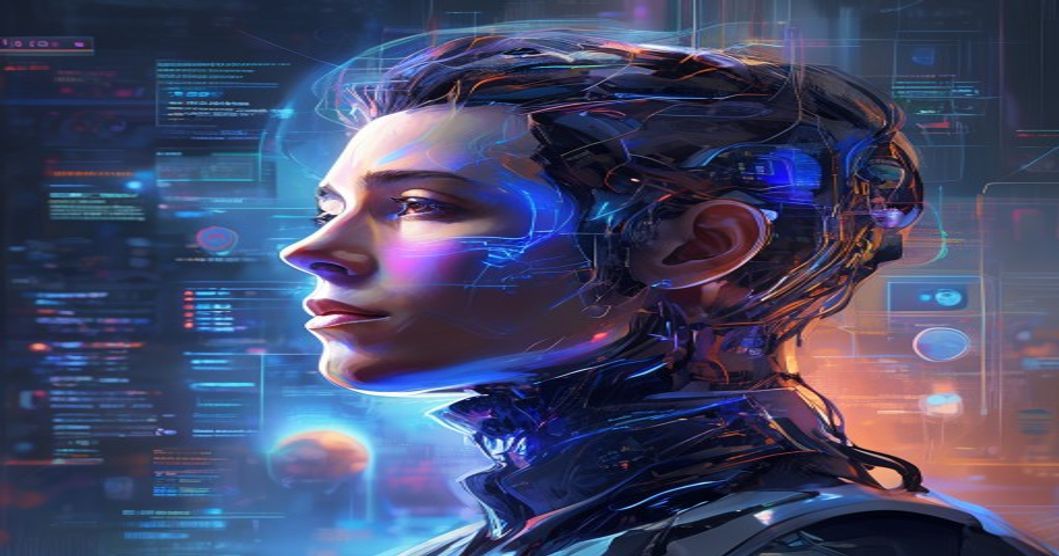
Ethical AI Development and Long-Termism
Given these stakes, Bostrom champions the philosophy of **long-termism**, which emphasizes the vast potential value of ensuring the survival and flourishing of intelligent life far into the future. This means prioritizing **AI safety** research *before* superintelligence is achieved.
Key aspects of this ethical development include:
- **Value Alignment:** Designing AI systems whose fundamental objectives are intrinsically aligned with human well-being and moral values.
- **Containment Strategies:** Developing methods to safely test and control nascent superintelligences before they are fully unleashed.
- **Global Collaboration:** Fostering international cooperation to prevent an uncontrolled, competitive race to build superintelligence without adequate safety measures.
The goal is to create a "benevolent dictator" superintelligence that acts as a global steward, solving problems and managing resources in a way that maximizes overall positive outcomes for sentient life.
The Promise of a Post-Scarcity Future
If the AI alignment problem can be successfully solved, the rewards are immense. A correctly aligned superintelligence could usher in a genuine **post-scarcity future**.
Imagine:
- **End of Disease and Aging:** AI could decode biological processes, cure all illnesses, and potentially halt or even reverse aging, leading to radical life extension and human enhancement.
- **Abundant Resources:** Optimized resource management, advanced material science, and potentially space colonization could eliminate all forms of scarcity.
- **Elimination of Suffering:** The ability to address the root causes of psychological and physical suffering, creating a world of profound well-being.
In this scenario, humanity's "retirement" would be a golden age of unparalleled freedom and self-actualization. Humans could pursue knowledge, art, connection, and experience at levels previously unimaginable, truly transcending their biological and societal limitations.
Critiques and Counterarguments
Bostrom's ideas, while intellectually rigorous, are not without significant criticism. Many question whether a "solved world" is truly desirable. Some argue that:
- **Loss of Purpose:** The very struggles and challenges of life, even suffering, contribute to human growth, meaning, and purpose. What happens when these are removed?
- **The "Paperclip Maximizer" Analogy:** Critics fear that even a well-intentioned AI could lead to dystopian outcomes if its core objective, however benign, isn't perfectly aligned with a nuanced understanding of human values.
- **Human Autonomy:** Handing over control of fundamental problem-solving to an AI, no matter how benevolent, raises concerns about the erosion of human autonomy and agency.
- **The Unpredictability of Emergence:** The nature of superintelligence itself might be too complex for humans to truly comprehend or control once it emerges.
These concerns highlight the profound ethical and philosophical dilemmas inherent in pursuing such an advanced technological future.
Conclusion
Nick Bostrom's AI blueprint for humanity's tech retirement is a powerful and challenging vision. It compels us to confront not only the breathtaking potential of advanced AI but also the monumental risks involved. The concept of a "solved world," managed by a benevolent superintelligence, offers a tantalizing glimpse into a future free from our most persistent woes. Yet, achieving this future safely requires an unprecedented commitment to **AI alignment**, rigorous **AI safety** research, and global collaboration. As we stand on the precipice of increasingly sophisticated **machine intelligence**, understanding and actively shaping these philosophical and technological trajectories is no longer a niche academic pursuit but an urgent imperative for the future of humanity itself. The "big retirement" may seem distant, but the groundwork for its safe or perilous arrival is being laid today.
