Pope's AI Message Tolkien Takedown of Tech Transhumanism
In an increasingly digitized world, where the boundaries of technology seem limitless, ancient wisdom often resurfaces in unexpected ways. Recently, the global conversation around Artificial Intelligence (AI) took a fascinating turn when the Holy See weighed in with a profound message, featuring a subtle yet powerful reference to J.R.R. Tolkien's *The Lord of the Rings*. This wasn't merely a casual nod to popular culture; it was an expert, if perhaps unintentional, critique aimed squarely at certain tech billionaires and their often-misguided interpretations of Tolkien, particularly regarding **tech transhumanism** and the pursuit of unfettered technological power. The Pope's AI message, imbued with the spirit of Middle-earth, offers a timely moral compass for navigating the complex ethical landscape of AI and humanity's future.
The Holy See's Stance on Artificial Intelligence and Human Dignity
The Catholic Church, under recent pontificates, has demonstrated a keen interest in the ethical implications of emerging technologies, recognizing their profound impact on human life and society. Far from being luddites, the Vatican has actively engaged with the global tech community, advocating for responsible innovation rooted in human values. This engagement culminated in initiatives like the "Rome Call for AI Ethics," which emphasizes principles such as transparency, inclusion, responsibility, impartiality, reliability, and security. The core concern driving the Church's involvement in **AI ethics** is the preservation of **human dignity AI** – ensuring that these powerful tools serve humanity, rather than diminish or replace it.
The Church’s deep reflection on AI stems from a fundamental understanding of what it means to be human: created in God's image, possessing inherent dignity, free will, and a capacity for love and moral reasoning. When AI development ventures into areas that seek to redefine human nature, pursue **digital immortality**, or blur the lines between creator and creation, it raises significant **AI moral implications**. The Pope's interventions are not to halt progress, but to guide it towards an **authentic human development** that respects life and fosters the common good, ensuring technology remains a servant, not a master.
Tolkien's Enduring Critique of Power and Technology
J.R.R. Tolkien's *The Lord of the Rings* is more than just a fantasy epic; it's a meticulously crafted world imbued with deep philosophical and ethical reflections on power, corruption, and the natural world. Tolkien, a devout Catholic and a veteran of World War I, witnessed firsthand the destructive potential of industrialization and unchecked technological ambition. His tales, therefore, are often interpreted as a subtle yet potent critique of modernism, mirroring his personal unease with the dehumanizing effects of industrial society.
Sauron, Saruman, and the Lure of Dominion
In Middle-earth, the primary antagonists, Sauron and Saruman, represent different facets of the corrupting influence of power and technology. Sauron, the Dark Lord, seeks absolute dominion, wielding the One Ring—a symbol of ultimate control achieved through cunning and dark arts. His power is derived from forging, manipulating, and dominating others. Saruman, the once-wise wizard, falls prey to a similar temptation, turning his immense knowledge towards building an industrial war machine at Isengard, scarring the land and enslaving its creatures for his own ambitions. Both figures exemplify the dangers of **technological hubris**: the belief that one can master nature, control destiny, and reshape reality through sheer force of will and sophisticated engineering, without regard for moral limits or natural order.
The Misinterpretation by Tech Billionaires
Interestingly, some figures in the tech world have expressed admiration for Tolkien's universe, yet often seem to misinterpret its core message. There's a curious tendency among certain tech billionaires to identify with the grand, world-shaping ambitions of characters like Sauron or Saruman, rather than the humble, ethical heroism of the Hobbits or the wisdom of Gandalf. They often view the pursuit of transformative technologies—from **AI and humanity** integration to space colonization and life extension—as a heroic quest to overcome limitations, akin to forging a new Ring of Power, rather than a cautionary tale about the perils of such pursuits. This superficial reading misses the entire point of **J.R.R. Tolkien philosophy**, which champions humility, stewardship, and resistance to the corrupting influence of power, emphasizing that true strength often lies in renunciation, not acquisition.
The Pope's Masterstroke: Tolkien as a Moral Compass for AI
When the Pope references Tolkien in the context of AI, it's a brilliant and sophisticated move. It implicitly challenges the prevailing narratives around technology, offering a different lens through which to view progress and humanity's place within it. It acts as an **expert troll** against the misinterpretations of **tech billionaires Tolkien** readings, subtly reminding them that their heroes might actually be the villains of the story they claim to admire.
Resisting the Allure of the One Ring (AI Power)
The parallels between the One Ring and the immense power of advanced AI are striking. The Ring promises unparalleled efficiency, control, and the ability to fulfill desires, but at the cost of one's soul, agency, and connection to the natural world. Similarly, unchecked AI promises vast capabilities – from optimizing every aspect of life to potentially creating forms of superintelligence – yet raises profound questions about human autonomy, the sanctity of life, and the very definition of consciousness. The Pope's message, through the lens of Tolkien, urges caution, reminding us that the greatest power often comes with the greatest temptation to dominate and corrupt. It’s a call to resist the seductive allure of absolute control, whether through magic or algorithms, and to uphold the dignity of creation.
Humility vs. Hubris in the Age of AI
Tolkien's enduring message is one of humility, highlighting the strength of the ordinary and the importance of simple virtues like friendship, courage, and self-sacrifice. The small Hobbits, seemingly insignificant, are ultimately the ones capable of resisting the Ring's power and saving Middle-earth, precisely because they lack the grand ambitions that corrupt others. This contrasts sharply with the often-grand, even hubristic visions of some **tech transhumanism** proponents who envision a future where human limitations are overcome through technological augmentation, sometimes bordering on a desire for god-like powers. The **Catholic Church AI** perspective aligns with Tolkien here, emphasizing that true progress respects inherent limitations and embraces stewardship rather than domination. The Pope’s message serves as a powerful counter-narrative to those who would seek to transcend humanity without adequate moral and ethical grounding.
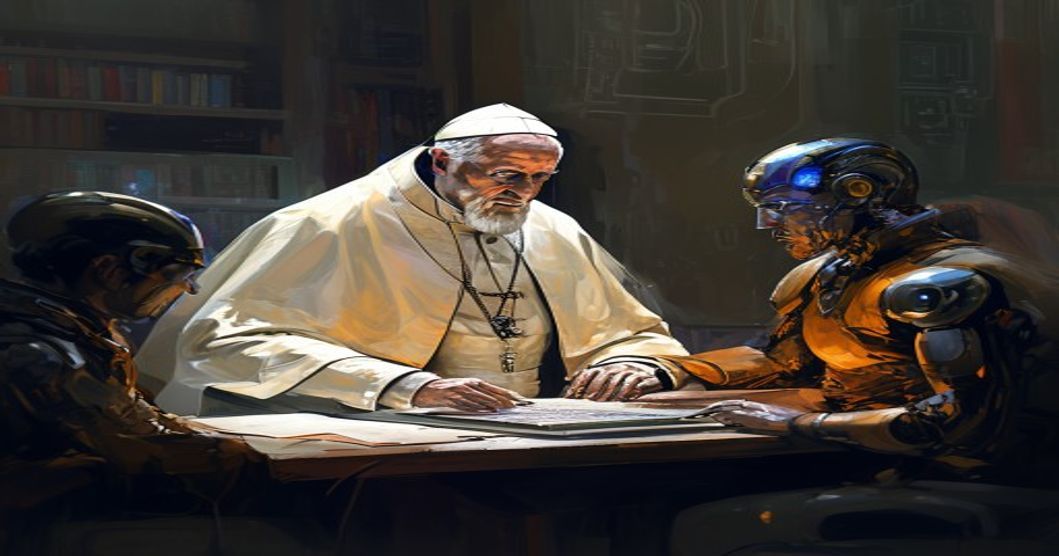
Navigating the Future: Authentic Human Development in the AI Era
The Pope's AI message, framed by Tolkien's enduring wisdom, offers a crucial framework for **AI governance** and **digital ethics**. It is a strong call for a human-centric approach to technological development, one that prioritizes **authentic human development** over mere technological advancement. This perspective necessitates rigorous ethical reflection, interdisciplinary dialogue, and a commitment to ensuring that AI serves the common good and respects the fundamental rights and dignity of every person.
To truly foster responsible AI, we must avoid the pitfalls of a purely utilitarian or reductionist view of humanity. The future of AI and **tech transhumanism** requires more than just innovation; it demands profound wisdom. It calls for leaders and innovators who understand that the pursuit of knowledge and power, while valuable, must always be tempered by moral responsibility and a recognition of our inherent interconnectedness. The lessons from Middle-earth remind us that the greatest victories are often won not through superior force or technology, but through humility, integrity, and the courage to make ethical choices, even when faced with overwhelming power.
Conclusion
The Pope's AI message, underscored by a surprising yet poignant reference to J.R.R. Tolkien, stands as a sophisticated and timely intervention in the global debate surrounding artificial intelligence and its implications for human existence. It serves as a subtle, yet powerful, "Tolkien takedown" of the prevailing technological hubris often found within certain tech circles, gently reminding us that the narratives of Middle-earth offer not just entertainment, but vital moral lessons for our own technologically advanced age. By invoking the spirit of *The Lord of the Rings*, the Holy Father champions an ethical path forward, one that prioritizes **human dignity AI** and rejects the corrupting allure of unchecked power, whether it manifests as a magical ring or a superintelligent algorithm. As we continue to push the boundaries of technology, the wisdom of Tolkien—championed by the Pope—becomes an indispensable compass, guiding us towards a future where innovation serves humanity, rather than striving to transcend it without moral grounding.
