Trump Weighs AI Control Our Transhuman Destiny
In an era defined by breakneck technological advancement, artificial intelligence (AI) has emerged as a double-edged sword, promising unparalleled progress while simultaneously raising profound ethical and existential questions. From revolutionizing industries to accelerating scientific discovery, AI’s trajectory seems boundless. Yet, this very potential has sparked a critical debate: how do we govern a technology that could fundamentally reshape human existence? Recent reports indicating that the Trump administration is considering an executive order to establish federal oversight over new AI models thrusts this discussion squarely into the political arena, bringing with it implications that stretch far beyond mere economic regulation – touching upon nothing less than our collective transhuman destiny.
The idea of governing AI is not new, but the increasing power and ubiquity of models like large language models and advanced generative AI have brought an unprecedented urgency to the conversation. Political figures, once seemingly content to let Silicon Valley self-regulate, are now grappling with the immense societal impact of this technology. This pivot towards proactive AI regulation marks a significant moment, suggesting that governments globally are waking up to the need for a guiding hand in the development of tools that could redefine intelligence, work, and even what it means to be human.
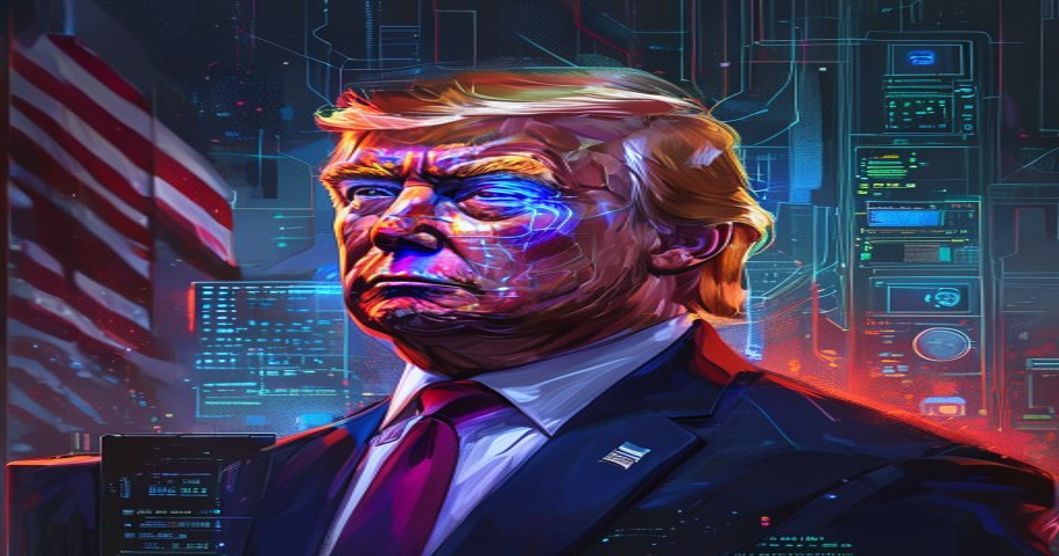
The Dawn of AI Regulation: A Political Imperative
The sudden surge of interest from the highest levels of government in establishing robust AI control isn't merely a political whim; it's a response to a rapidly evolving technological landscape. For years, AI development largely proceeded unfettered, driven by innovation hubs in the private sector. However, the last few years have seen an explosion in AI capabilities, making its integration into daily life unavoidable and its potential risks undeniable.
Why Now? The Accelerating Pace of AI Innovation
The recent leaps in artificial intelligence, particularly in areas like natural language processing and computer vision, have profoundly altered public perception and technological capabilities. AI models are no longer confined to academic labs; they are writing code, generating art, assisting in medical diagnoses, and influencing financial markets. This unprecedented advancement has highlighted several pressing concerns:
- **Economic Disruption:** The fear of widespread job displacement due to AI automation is palpable. While AI promises increased productivity, the question of how societies will adapt to significant shifts in the workforce remains largely unanswered. The story of a worker ousted by AI, though often anecdotal, resonates deeply with many.
- **Ethical Quandaries:** From biased algorithms perpetuating societal inequalities to the misuse of deepfakes, the ethical implications of AI are complex and far-reaching. Ensuring fair and equitable AI systems is a paramount challenge.
- **National Security Risks:** The development of autonomous weapons systems, AI-powered cyber warfare, and the potential for surveillance technologies raise serious concerns for national and global security.
- **Existential Threats:** A growing chorus of AI researchers and public intellectuals warn of the long-term, even existential, risks posed by superintelligent AI if not properly aligned with human values.
Trump's Pivot: From Laissez-Faire to Oversight
Historically, the Trump administration's approach to technology regulation leaned towards minimal intervention, favoring market-driven solutions. However, the reports of a potential executive order regarding federal oversight over new AI models signal a distinct shift. This move suggests an acknowledgment that the stakes of unchecked AI development are too high to be left solely to the private sector. The precise scope of such an order remains to be seen, but it could potentially involve:
- **Establishing federal guidelines:** Defining standards for AI safety, transparency, and accountability.
- **Creating advisory bodies:** Bringing together experts from government, industry, and academia to inform policy.
- **Funding research:** Directing resources towards AI safety and ethical development.
- **International cooperation:** Working with allies to establish global norms for AI governance.
This proactive stance on AI regulation, regardless of the administration in power, underscores a growing global consensus that effective AI governance is no longer optional but essential for responsible technological progress.
AI's Dual Nature: Progress and Peril
Understanding the imperative for AI control requires a clear-eyed view of both its transformative potential and its inherent risks. The technology is neither inherently good nor evil; its impact is shaped by how it is developed, deployed, and regulated.
The Promise of Artificial Intelligence
The benefits promised by advanced artificial intelligence are nothing short of revolutionary. AI holds the key to unlocking solutions for some of humanity's most intractable problems:
- **Healthcare:** AI can accelerate drug discovery, personalize treatment plans, improve diagnostic accuracy, and manage public health crises more effectively.
- **Scientific Discovery:** From climate modeling to materials science, AI is supercharging research across virtually all scientific disciplines, enabling breakthroughs that were once unimaginable.
- **Economic Growth:** AI-driven automation and efficiency gains can boost productivity, create new industries, and elevate living standards globally.
- **Solving Complex Problems:** AI excels at processing vast amounts of data and identifying patterns, making it invaluable for urban planning, disaster response, and optimizing complex systems.
The Shadow of Unchecked AI
Despite its radiant promise, the unbridled development of AI presents significant dangers. These challenges are precisely what necessitate robust AI regulation and federal oversight:
- **Job Displacement:** While AI creates new jobs, it also automates existing ones. This transition requires proactive policies to support displaced workers and invest in retraining for future skills.
- **Ethical Biases:** AI models trained on biased data can perpetuate and amplify societal prejudices, leading to discriminatory outcomes in areas like hiring, lending, and criminal justice.
- **Privacy Concerns:** AI systems often require access to vast datasets, raising critical questions about data privacy, surveillance, and individual liberties.
- **Autonomous Weapons:** The development of AI-powered lethal autonomous weapons systems (LAWS) poses profound ethical dilemmas and could destabilize global security.
- **Existential Risk:** The long-term concern among some experts is that highly advanced, unaligned artificial general intelligence (AGI) could pose an existential threat to humanity if its goals diverge from ours.
Transhumanism and the AI Connection: Shaping Our Future Selves
The concept of "transhuman destiny" directly links to the philosophical movement of transhumanism, which advocates for the enhancement of the human condition through technology. AI is not just a tool for economic growth; it's a foundational technology for achieving many transhumanist aspirations.
Transhumanism envisions a future where humanity overcomes its biological limitations through scientific and technological advancements, including genetic engineering, advanced prosthetics, and brain-computer interfaces. At the heart of many of these endeavors lies AI.
- **Cognitive Enhancement:** AI could power brain implants that augment memory, learning, and cognitive abilities, blurring the lines between human and machine intelligence.
- **Physical Augmentation:** AI-driven robotics and advanced prosthetics could grant individuals superhuman strength, agility, or sensory perception.
- **Life Extension:** AI is critical in accelerating breakthroughs in biotechnology, drug development, and personalized medicine, potentially leading to significant extensions of human lifespan.
- **Digital Immortality:** The ambitious goal of uploading human consciousness to digital platforms relies heavily on sophisticated AI and computational power.
The debate over AI control, therefore, isn't just about managing a technology; it's about deliberating on the very future of human evolution. Will AI be a benevolent partner in our journey to transcend biological limitations, or will unchecked AI development lead us down a path we cannot foresee or control? The decisions made on AI governance today will profoundly shape our capacity to guide our own transhuman destiny.
Key Areas for AI Regulation and Oversight
For any federal oversight or AI control framework to be effective, it must address several critical domains:
Data Privacy and Security
At the core of ethical AI is the responsible handling of data. Regulations must ensure robust data privacy protections, transparent data collection practices, and stringent cybersecurity measures to prevent misuse and breaches.
Algorithmic Transparency and Bias
To build trust and ensure fairness, AI systems need to be more transparent. This includes requiring developers to explain how their algorithms make decisions and actively mitigating biases in training data to prevent discriminatory outcomes.
Economic Impact and Workforce Adaptation
Governments must proactively address the economic shifts brought by AI. This means investing in education and retraining programs, exploring new economic models, and ensuring a social safety net for those affected by AI-driven job displacement.
AI Safety and Existential Risk
For powerful AI, a significant focus must be on safety protocols. This includes robust testing frameworks, circuit breakers, and mechanisms to ensure AI systems operate within defined parameters and human control, particularly as capabilities grow towards superintelligence.
International Collaboration
AI is a global technology, transcending national borders. Effective AI control requires international cooperation to establish shared norms, standards, and regulatory frameworks, preventing a "race to the bottom" in AI development.
The Road Ahead: Navigating the AI Frontier
The prospect of a Trump administration – or any administration – taking a definitive stance on AI control marks a crucial inflection point. The challenge lies in crafting regulations that protect society without stifling innovation, a delicate balance that will require ongoing dialogue between policymakers, industry leaders, ethicists, and the public.
The decisions we make today regarding AI governance will echo through generations. Will we harness AI to augment human potential, extend our lives, and solve global challenges, thereby truly shaping a positive transhuman destiny? Or will we allow it to develop without adequate foresight, leading to unintended consequences and a future far removed from our control? The emerging discussions around federal oversight signal a collective recognition that the time for passive observation is over. The future of humanity, intertwined with the evolution of AI, hangs in the balance, making proactive, thoughtful AI regulation an urgent and non-negotiable imperative.
Conclusion
The conversation around Trump's consideration of federal oversight for AI models is more than just a political headline; it's a pivotal moment in humanity's technological journey. As AI accelerates towards capabilities that once belonged solely to science fiction, the need for responsible AI control becomes paramount. The decisions made regarding AI regulation today will not only dictate economic impacts and ethical standards but will profoundly influence our path towards a transhuman future – a future where humanity could be enhanced, transformed, or fundamentally challenged by its own creations. It is through judicious governance, balanced with innovation, that we can hope to guide this powerful technology towards a destiny that truly benefits all of humankind.
