AI Film Drop Data Workers Fight Meta Leaks The Uncanny Valley of Control
The digital epoch is defined by a paradox: an era of unprecedented connectivity and technological advancement, yet simultaneously one fraught with anxieties around privacy, control, and the very definition of human agency. At the intersection of entertainment, labor rights, and corporate ethics, recent events have painted a vivid picture of this evolving landscape. From Amazon-owned MGM Studios dropping a contentious OpenAI-powered movie to the burgeoning resistance of data center workers and the alarming leaks of Meta employee data, we are witnessing the emergence of a new "Uncanny Valley of Control"—a space where technology, increasingly indistinguishable from human intelligence, dictates our lives in ways both subtle and profound.
This isn't merely a series of isolated incidents; it’s a constellation of events signaling a critical juncture. As artificial intelligence embeds itself deeper into the fabric of our society, transforming everything from content creation to global labor markets, the fundamental questions of who wields this power, how it's regulated, and what it means for humanity become paramount. On Uncanny Valley, we delve into where this is all headed, exploring the complex interplay of AI, human labor, corporate responsibility, and the looming shadows of digital governance.
The Shifting Sands of AI in Hollywood: Amazon's OpenAI Dilemma
The film industry, a bastion of human creativity and storytelling, now finds itself at the forefront of the AI revolution. Generative AI tools are capable of scripting, animating, scoring, and even directing, promising efficiency and boundless imagination. Yet, with this promise comes a profound ethical and economic challenge, vividly illustrated by Amazon-owned MGM Studios' decision to shelve a project involving OpenAI.
When Creativity Meets Code: The Promise and Peril of Generative AI in Film
The allure of AI in content creation is undeniable. Imagine a tool that can generate scripts based on audience preferences, create stunning visual effects with minimal human input, or even craft entire film scores on demand. Generative AI offers a future where the constraints of budget, time, and even human imagination seem to diminish. However, the decision by MGM to drop an OpenAI movie suggests a more complex reality.
This move likely stems from a multitude of concerns: intellectual property disputes over AI-generated content, the potential backlash from writers, actors, and other creatives whose livelihoods are threatened, and broader questions about artistic integrity and human authorship. As AI and film industries become increasingly intertwined, studios must grapple with the ethical implications of using AI to bypass human talent, the potential for algorithmic bias in storytelling, and the public's perception of "art" created by machines. This incident underscores the urgent need for robust ethical frameworks and clear guidelines for AI use in creative industries, ensuring that innovation doesn't come at the cost of human artistry and fair compensation.
Beneath the Surface: Data Center Workers and the Fight for Dignity
While AI creates headlines in Hollywood, its true engine rooms are the vast, silent data centers that power our digital world. These facilities, often located in remote areas, are maintained by a workforce whose critical contributions are frequently overlooked and undervalued. Yet, these data center workers are increasingly pushing back against the very systems they uphold.
The Invisible Backbone: Exploitation in the AI Economy
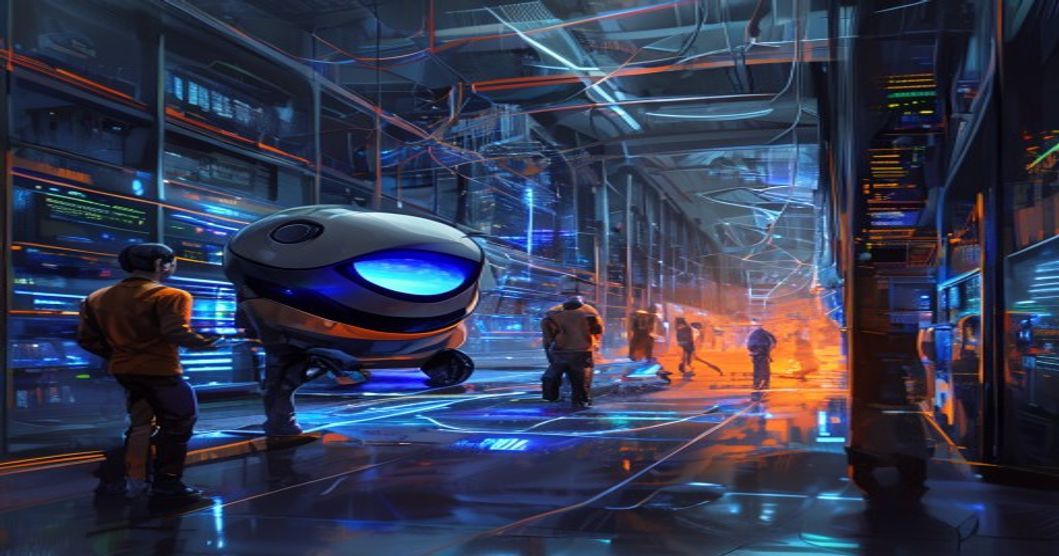
The smooth operation of AI models, streaming services, and global communications relies heavily on the physical labor of data center workers. They are the unseen heroes who build, maintain, and troubleshoot the intricate hardware infrastructure that underpins our digital existence. Despite their indispensable role, these workers often face grueling conditions, precarious employment, and wages that do not reflect the immense wealth generated by the tech giants they serve.
Recent years have seen a growing wave of activism among these workers. From demands for better pay and benefits to calls for improved safety standards and greater job security in the face of increasing automation, this resistance highlights a fundamental tension in the AI economy. As companies invest billions in AI development, the human cost of powering this innovation often goes unrecognized, leading to accusations of exploitation and a deepening divide between the digital elite and the essential workers who enable their vision. This fight is not just about wages; it's about asserting human value and demanding dignity in an increasingly automated world.
From Data Labeling to Digital Janitors: The Human Cost of AI Training
Beyond the physical infrastructure, countless individuals are engaged in the less glamorous but equally crucial task of training AI models. These "digital janitors" or "ghost workers" perform repetitive, often psychologically taxing tasks like data labeling, content moderation, and algorithm refinement. They teach AI systems to recognize objects, understand language, and filter objectionable content, yet remain largely invisible and often poorly compensated.
The psychological toll of this work, particularly in content moderation where workers are exposed to the darkest corners of the internet, is immense. Their struggles underscore the hidden human infrastructure that underpins even the most sophisticated artificial intelligence. Their fight for better conditions, mental health support, and fair contracts is a powerful counter-narrative to the frictionless, automated future often promised by tech companies. It's a stark reminder that even as we build intelligent machines, the foundation of this progress rests on human labor that demands respect and protection.
The Leaky Ship of Surveillance Capitalism: Meta's Data Woes
While AI's transformative power captures imaginations, its inherent demand for data raises critical questions about privacy, security, and corporate responsibility. The recent incident involving Meta leaking employee data serves as a sobering reminder of the pervasive risks within the surveillance capitalism model.
Employee Privacy in the Digital Age: The Meta Leak Incident
The leakage of employee data from a tech giant like Meta is more than just an internal HR issue; it's a profound breach of trust and a stark illustration of the vulnerability inherent in massive data collection. For employees, such leaks can lead to identity theft, targeted harassment, and a deep sense of insecurity. For the company, it erodes trust, invites regulatory scrutiny, and highlights potential weaknesses in cybersecurity protocols.
In an era where companies collect vast amounts of data on their workforce, from performance metrics to communication patterns, the security of this information is paramount. The Meta incident underscores the urgent need for robust data privacy frameworks, not just for users, but for employees as well. It forces a critical examination of how much data is truly necessary to collect and how securely it is stored and protected.
The Wider Implications: User Data, Corporate Power, and Digital Ethics
Expanding beyond employee data, the incident resonates with the broader concerns around user data privacy and the immense power wielded by tech corporations. Companies like Meta thrive on collecting, analyzing, and monetizing user data, shaping online experiences and influencing behavior. This surveillance capitalism model, while driving innovation and revenue, also creates a significant power imbalance.
When companies demonstrate an inability or unwillingness to safeguard even their internal data, it raises serious questions about their commitment to protecting the data of billions of users globally. This erosion of trust feeds into a larger narrative of digital ethics, challenging the unchecked growth of corporate power and emphasizing the need for greater transparency, accountability, and user control over personal information. The debate shifts from mere privacy to a fundamental question of who owns and controls the digital identities that increasingly define us.
Navigating The Uncanny Valley of Control
The "Uncanny Valley" concept, originally describing our discomfort with robots that are almost, but not quite, human-like, now extends to the unsettling realm of algorithmic governance and digital control. As AI pervades every aspect of life, we enter a psychological space where the lines between human autonomy and algorithmic influence blur, creating a subtle yet pervasive sense of unease.
Beyond Human-Like AI: The Psychological Impact of Algorithmic Governance
This new Uncanny Valley is not about robots' appearance but about the invisible hand of AI shaping our choices, filtering our information, and even dictating opportunities. From personalized recommendations that narrow our worldview to AI-driven hiring algorithms that may perpetuate bias, algorithmic governance is omnipresent. The discomfort arises from the feeling that decisions are being made for us, by systems we don't fully understand or control, yet these systems are sophisticated enough to mimic human judgment, often with uncanny accuracy.
The psychological impact is profound: a potential erosion of free will, a sense of surveillance, and a growing disconnect from authentic human experiences as AI curates our reality. This subtle loss of agency, where our lives are optimized and predicted by algorithms, creates an unsettling tension between convenience and control.
Transhumanist Echoes: Merging with the Machine, or Being Controlled by It?
These developments carry significant implications for transhumanism, the philosophical and intellectual movement advocating for the enhancement of the human condition through technology. The promise of transhumanism is a future where AI and biotechnology augment human capabilities, extending life, enhancing intelligence, and overcoming limitations.
However, the current trajectory presents a critical question: are we truly merging with the machine to become something greater, or are we inadvertently designing the mechanisms for our own subjugation? If AI systems, controlled by powerful corporations, increasingly dictate our work, our leisure, our health data, and even our creative outputs, then the transhumanist dream of human enhancement might morph into a reality of algorithmic control. The ability to enhance human capabilities must be carefully balanced with safeguards that ensure autonomy, privacy, and genuine human flourishing, rather than merely creating a more efficient, but ultimately controlled, version of humanity. This is the ultimate ethical frontier, where the pursuit of progress must be tempered with an unwavering commitment to human dignity and freedom.
Conclusion
The confluence of Amazon's AI film dilemma, the burgeoning fight for rights among data center workers, and Meta's data privacy leaks paints a stark picture of our current technological landscape. These events are not isolated incidents but interconnected threads in a rapidly weaving tapestry of AI's societal impact. We stand at the precipice of a new era, one defined by the powerful yet often unsettling presence of artificial intelligence, forcing us to confront the "Uncanny Valley of Control."
As AI and human lives become increasingly intertwined, the fundamental questions of who benefits, who controls, and whose voices are heard become critically important. The struggle of data workers highlights the hidden human cost of our digital world, demanding recognition and fair treatment. The challenges in the film industry underscore the ethical imperative to balance innovation with human creativity and intellectual property rights. And the pervasive issue of data leaks from tech giants like Meta serves as a stark reminder of the urgent need for robust data privacy, corporate accountability, and digital ethics.
Navigating this complex terrain requires more than just technological advancement; it demands a collective commitment to ethical AI development, comprehensive regulatory frameworks, and empowering individuals—whether as creators, workers, or users—to reclaim agency in an increasingly automated world. The future of AI and indeed, the future of humanity, depends on our ability to transcend the Uncanny Valley of Control, ensuring that technology serves humanity, rather than dominating it.
