AI's Next Evolution Stalled By Unspoken White House Mandates
The landscape of artificial intelligence is one of breathtaking innovation, where each passing month brings advancements that redefine what's possible. From generative AI creating stunning art to large language models (LLMs) revolutionizing communication and problem-solving, the trajectory of **AI evolution** points towards a future deeply intertwined with human progress. This rapid acceleration has ignited conversations about everything from the singularity to **transhumanism**, envisioning a future where human capabilities are augmented and expanded through technology. Yet, beneath the surface of this boundless potential, an unsettling reality is emerging: the very forces meant to guide **responsible AI** development might be inadvertently stifling its next great leap.
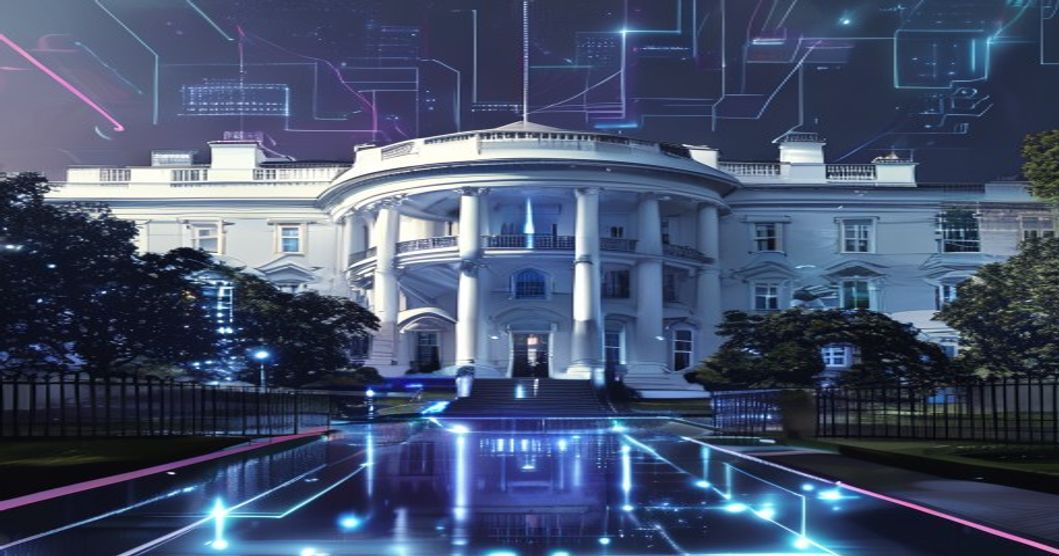
A growing unease among AI developers and researchers suggests that the **White House AI policy** is being forged in real-time, often without clear guidelines or public discourse. This ad hoc approach, driven by national security concerns and a desire to control **frontier AI models**, is creating an environment of regulatory ambiguity that directly impedes **tech innovation**. Nowhere is this more apparent than in the perplexing case of Anthropic, a leading AI research company, whose advanced models remain locked away, their release stalled by unspoken, unofficial mandates. The promise of **AI's next evolution** hangs in the balance, caught between the imperative for safety and the peril of opaque governance.
The Unseen Hand: How AI Innovation is Being Chilled
The current climate around **AI regulation** in the United States is characterized by a dynamic tension. On one hand, there's a clear recognition of AI's transformative power and the need to maintain America's competitive edge. On the other, profound concerns regarding **AI safety**, national security, and potential societal disruption fuel a cautious, often restrictive, approach. This caution, however, appears to manifest not through codified laws or transparent processes, but through informal directives and unstated expectations.
Anthropic's Predicament: A Case Study in Regulatory Ambiguity
One of the most prominent examples of this regulatory murkiness centers around Anthropic, a company founded by former OpenAI researchers with a strong focus on **ethical AI** and safety. Anthropic has developed advanced models like Claude Mythos and Fable 5, which are poised to push the boundaries of current **artificial intelligence** capabilities. However, these models remain unavailable for general distribution. The official explanation points to issues that arose during the Trump administration, yet the specific transgressions or the exact nature of the ongoing concerns have never been clearly articulated.
This lack of transparency creates a profound chilling effect. Developers at Anthropic, and indeed across the entire **AI development** ecosystem, are left guessing at the rules of engagement. What constitutes a "safe" or "acceptable" model for release? What specific thresholds or functionalities trigger a hold-up? Without clear answers, companies are forced to self-censor, delay releases, or even abandon promising research paths out of fear of running afoul of unspoken government concerns. This isn't about legitimate oversight; it's about operating in a vacuum of information, where arbitrary decisions can derail years of cutting-edge work.
The Peril of "Real-Time" Rulemaking
The White House's approach of "making up its rules for AI in real time" presents significant challenges. Established industries, even highly sensitive ones, operate within defined legal and regulatory frameworks. While these frameworks evolve, they typically do so through public comment periods, legislative processes, and clearly communicated guidelines. For **AI innovators**, the absence of such clarity is an existential threat.
Imagine trying to build a skyscraper without knowing the building codes, or developing a new drug without understanding FDA requirements until after your research is complete. This is the predicament facing many **AI development** firms. Investment in groundbreaking research becomes riskier, as the goalposts can shift without warning. Small startups, lacking the legal and lobbying resources of larger tech giants, are particularly vulnerable, potentially being squeezed out of the race to build **advanced AI**. This environment discourages the bold experimentation necessary for true breakthroughs, ultimately slowing down overall **technological progress** and hindering the promise of transformative **AI solutions**.
Navigating the Ethical Minefield: What Drives White House Scrutiny?
It's crucial to acknowledge that the government's concerns about **artificial intelligence** are not entirely unfounded. The potential for misuse of powerful AI systems is significant, and the stakes are incredibly high.
Balancing Innovation with AI Safety and Security
The rapid advancements in **generative AI** and other **advanced AI** applications bring with them legitimate anxieties. The creation of highly realistic deepfakes could sow disinformation and disrupt democratic processes. The development of autonomous weapons systems raises profound ethical questions about lethal decision-making. The societal impacts of widespread AI adoption, from job displacement to privacy concerns, require careful consideration.
The desire for **AI safety** and national security is a driving force behind **government oversight AI**. The White House, alongside intelligence agencies, is likely wrestling with how to prevent malicious actors from leveraging powerful **AI models** for cyber warfare, surveillance, or large-scale propaganda. Controlling **frontier AI models** is seen as a strategic imperative to protect national interests and maintain stability. This perspective underscores the need for effective **AI governance** that can mitigate risks without stifling beneficial innovation.
The Geopolitical Chessboard of AI Dominance
Beyond domestic concerns, the global race for **AI dominance** adds another layer of complexity. Nations like China are investing heavily in **AI development**, aiming to surpass the United States in key technological areas. In this **geopolitical AI** competition, the ability to control and advance cutting-edge **AI innovation** becomes a matter of national power and influence.
The White House likely views the regulation of **advanced AI** not just through a lens of safety, but also through one of strategic control. Restricting the public release of potentially disruptive models could be an attempt to manage their proliferation, ensuring that American interests are protected and that sensitive technologies don't fall into the wrong hands. However, an overly restrictive or opaque approach risks pushing innovation offshore or ceding leadership to nations with less stringent or more clearly defined, albeit different, regulatory landscapes.
The Transhumanist Vision vs. Regulatory Realities
For proponents of **transhumanism**, **artificial intelligence** is not just another technology; it's a fundamental step towards overcoming human limitations and unlocking unprecedented potential. The vision includes using AI to accelerate scientific discovery, develop cures for diseases, enhance cognitive abilities, and even extend lifespan. **Advanced AI** is seen as a powerful co-pilot in humanity's journey towards self-actualization and species-level improvement.
When **AI's next evolution** is stalled by opaque mandates, this grand vision is directly impacted. The models currently held back, like Anthropic's Claude Mythos or Fable 5, could represent breakthroughs that contribute to these very goals. Delayed access to more powerful, ethical, and versatile **AI systems** means slower progress in medical research, less efficient problem-solving for global challenges like climate change, and a postponed future where humans and AI collaborate to achieve incredible feats. The current regulatory environment, while perhaps well-intentioned, inadvertently delays the realization of a future where **AI enhances human potential** in profound ways.
Towards a Clearer Path: Recommendations for Sustainable AI Evolution
To truly unlock the potential of **artificial intelligence** and navigate its challenges responsibly, a more coherent and transparent approach to **AI policy** is urgently needed.
The Need for Transparent and Predictable AI Policy
The most critical step is to replace ad hoc, unspoken mandates with clear, publicly articulated guidelines. This would involve:
* **Defining AI capabilities** that trigger specific levels of scrutiny.
* **Establishing clear criteria** for model releases and safety benchmarks.
* **Implementing formal review processes** with defined timelines and appeals mechanisms.
* **Providing public rationales** for regulatory decisions, even if sensitive information needs to be handled carefully.
Transparency fosters trust and allows developers to innovate with greater confidence, understanding the boundaries and expectations.
Fostering Dialogue Between Government and Innovators
Effective **AI governance** requires robust, ongoing dialogue between policymakers, technical experts, ethicists, and industry leaders. This collaboration can ensure that regulations are informed by a deep understanding of the technology's capabilities and limitations, preventing unintended consequences. Forums for regular exchange, advisory committees, and joint research initiatives could bridge the gap between regulatory intent and practical implementation.
International Cooperation on AI Governance
Given that **AI development** is a global phenomenon, national regulations alone are insufficient. There is a pressing need for international cooperation to establish common principles, standards, and even potential agreements on the development and deployment of **frontier AI models**. This would help prevent a fragmented regulatory landscape and ensure that ethical and safety considerations are addressed on a global scale.
Conclusion
The promise of **artificial intelligence** is immense, offering pathways to solve humanity's most intractable problems and usher in an era of unprecedented progress. However, the current approach to **AI regulation** in the United States, characterized by unspoken White House mandates and real-time rule-making, risks stalling **AI's next evolution**. The case of Anthropic's unreleased Claude Mythos and Fable 5 serves as a potent reminder of the chilling effect this ambiguity has on **tech innovation**.
To truly harness the power of **advanced AI** for the benefit of humanity—a future often envisioned by those exploring **transhumanism**—we need a shift towards transparent, predictable, and collaborative **AI policy**. Without clear guidelines, the brightest minds in **AI development** will continue to operate in a shadowland, delaying the very breakthroughs that could propel us forward. The time for guessing is over; the future of **artificial intelligence** demands a clear, articulated strategy that balances safety with the imperative for progress, ensuring that AI fulfills its potential as a force for good.
