The Transhuman Haaland Era
Erling Haaland. The name alone conjures images of blistering speed, relentless power, and an almost superhuman ability to find the back of the net. On the football pitch, he is a force of nature, a goal-scoring machine whose physical prowess pushes the boundaries of athletic achievement. Yet, in a curious turn of events, the Norwegian striker’s most ubiquitous presence isn't always on the field, or even in a stadium. It’s online, in the sprawling, often surreal landscape of the internet, where he has become less a mere footballer and more an omnipresent digital entity. This phenomenon, largely fueled by artificial intelligence and fervent fan culture, heralds what we might call the "Transhuman Haaland Era" – a fascinating glimpse into a future where celebrity, identity, and even humanity itself are increasingly augmented, extended, and replicated by technology.
Beyond the Pitch: Haaland's Digital Omnipresence
Even when Norway isn't competing in major tournaments like the World Cup, Erling Haaland manages to be "everywhere." His distinctive look, powerful physique, and almost meme-worthy stoicism have made him a prime subject for internet culture. Fans, captivated by his unique persona, began to craft an extensive digital mythology around him. From humorous edits placing him in absurd situations to deepfake videos of him endorsing outlandish products, Haaland's image became a canvas for collective digital creativity.
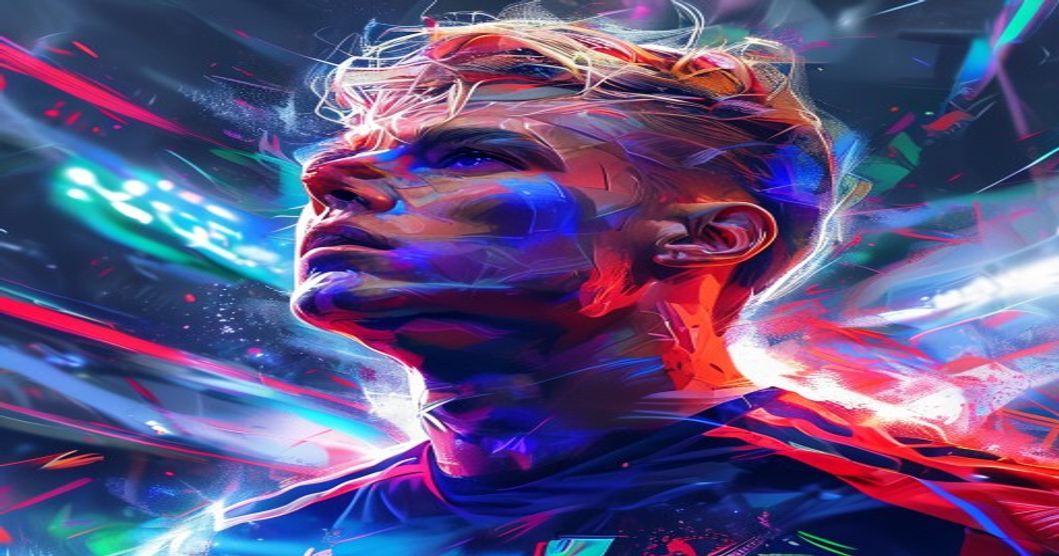
This organic fan engagement laid the groundwork, but it was the explosion of generative AI that truly supercharged his digital omnipresence. Algorithms, fed countless images and videos of Haaland, learned to replicate his likeness with startling accuracy. Suddenly, AI could place Haaland in any historical event, alongside any celebrity, or even in scenarios that defy logic, all without his direct involvement. He transcended the role of a mere athlete to become an internet character – a digital avatar continuously perpetuated by collective imagination and intelligent algorithms.
The Rise of the AI Avatar: A New Form of Celebrity
The ease with which AI can create convincing, albeit often outlandish, depictions of Haaland signals a profound shift in the nature of celebrity. No longer is a public figure's presence solely defined by their physical actions or sanctioned media appearances. Their "digital twin" or AI avatar can exist and interact in countless virtual spaces, often independently of the real person.
This phenomenon leverages advanced machine learning models, particularly those in the realm of generative adversarial networks (GANs) and diffusion models. These AI systems can take a dataset of Haaland's images and videos and synthesize entirely new, plausible, or even wildly imaginative images and clips. This allows for:
* **Virtual Endorsements:** AI-generated Haaland promoting obscure products or making humorous statements.
* **Historical Integration:** Placing Haaland in famous historical photographs or movie scenes.
* **Multiverse Manifestations:** Depicting Haaland as a superhero, a cartoon character, or even an ancient philosopher.
The implications for fan engagement are immense. Fans can now "interact" with a version of their idol that is infinitely malleable and present. It offers a new layer of connection, even if it's with a digital construct. However, it also raises questions about authenticity, control over one's image, and the very definition of a public persona in the age of pervasive artificial intelligence.
Transhumanism and the Digital Extension of Self
The "Transhuman Haaland Era" isn't merely about clever algorithms; it's a living case study of transhumanist ideals taking root in popular culture. Transhumanism, at its core, is a philosophical and intellectual movement advocating for the enhancement of the human condition through advanced technology. While often associated with bio-enhancements like gene editing or neural implants, it equally encompasses the extension of human capabilities and presence through digital means.
Haaland's digital ubiquity embodies several transhumanist concepts:
* **Extended Presence:** His AI avatar transcends geographical and temporal limitations. He can be "present" in multiple contexts simultaneously, even when physically elsewhere or resting. This extends his influence and reach far beyond what his biological self could achieve.
* **Digital Immortality (or Precursor):** While not true immortality, the continuous generation and perpetuation of his digital likeness online creates a persistent, evolving legacy that exists somewhat independently of his mortal career. In a future where AI can synthesize entire personalities, the concept of a "digital ghost" or a conscious AI replica of a person becomes less sci-fi and more an engineering challenge.
* **Augmented Identity:** Haaland's real identity is augmented by his digital persona. This isn't just a marketing ploy; it's a co-created identity shaped by both the athlete's actions and the collective digital consciousness. This collective augmentation hints at a future where personal branding becomes a deeply collaborative effort between individuals, AI, and communities.
From Athlete to Algorithm: The Evolution of Public Figures
What does it mean to be a public figure when your image can be infinitely replicated and manipulated by AI? For athletes like Haaland, this shift is revolutionary. Their brand is no longer solely their performance or their carefully curated public statements. It's also the vast, often uncontrolled, digital narrative woven around them by millions of users and sophisticated algorithms.
This presents both unprecedented opportunities and significant challenges:
* **Opportunities:** Enhanced global reach, deeper fan engagement, new revenue streams (e.g., licensing AI-generated content), and the ability to maintain relevance even during off-seasons or retirement.
* **Challenges:** Loss of control over one's image, the potential for misinformation and deepfakes, ethical dilemmas regarding intellectual property, and the psychological impact of seeing countless AI versions of oneself.
The careful navigation of this new digital landscape will define the longevity and authenticity of future public figures. Data analytics will play an even greater role, not just in tracking fan sentiment, but in understanding how AI-generated content influences public perception and brand value.
The Societal Impact of AI-Generated Personalities
The "Transhuman Haaland Era" serves as a microcosm for broader societal trends accelerated by AI. The proliferation of AI-generated personalities, from virtual influencers to digital assistants, is rapidly changing how we consume media, interact with brands, and perceive reality.
On the positive side, this technology democratizes creativity. Fans can become creators, blurring the lines between consumer and producer. It fosters new forms of entertainment and engagement, potentially making celebrity more accessible and interactive. It also allows for continuous content generation, keeping public figures relevant in an ever-demanding digital age.
However, the ethical considerations are paramount. The ease of creating convincing deepfakes poses significant risks for misinformation, fraud, and defamation. Differentiating between authentic content and AI-generated fictions becomes increasingly difficult, requiring enhanced digital literacy and robust ethical frameworks. Intellectual property rights for individuals whose likenesses are used by AI without consent will become a major legal battleground. The very notion of trust in digital media is at stake.
The Future is Now: What the Haaland Phenomenon Predicts
The digital journey of Erling Haaland is not an isolated incident; it's a blueprint for the future. We are on the cusp of an era where:
* **Personalized AI Interactions:** Fans might soon be able to generate personalized messages or even simulated conversations with AI versions of their favorite celebrities.
* **The Metaverse and Persistent Digital Identities:** As the metaverse evolves, digital avatars and AI constructs will become a more integral part of our daily interactions, blurring the lines between our physical and virtual selves. Public figures will have persistent digital representations that can inhabit various metaverse platforms.
* **AI-Enhanced Legacies:** Athletes, artists, and leaders might leverage AI to ensure their legacy lives on, with AI models capable of simulating their voice, mannerisms, and even thought patterns long after their physical presence is gone. This pushes the boundaries of digital immortality further than ever before.
The Transhuman Haaland Era, therefore, is more than just a football story; it's a bellwether. It signals a future where human achievement and technological innovation merge to redefine what it means to be a person of influence, a fan, and indeed, a human being in an increasingly AI-augmented world.
Conclusion
Erling Haaland, the prodigious striker, stands at the nexus of human excellence and technological advancement. His unparalleled athletic skill has made him a global icon, but it is his unwitting transformation into an AI-driven internet character that truly marks the advent of the "Transhuman Haaland Era." This phenomenon illuminates how artificial intelligence is not merely a tool but a force capable of extending, augmenting, and even replicating human identity and presence on an unprecedented scale.
As we move deeper into the 21st century, the lines between our physical selves and our digital avatars will continue to blur. The lessons from Haaland's digital omnipresence are clear: technology offers incredible opportunities for enhanced connection, creativity, and the perpetuation of legacy. Yet, it also demands critical engagement with complex ethical questions concerning authenticity, control, and the very nature of human identity in a world where AI can conjure convincing replicas of reality. The future of celebrity, and perhaps even humanity, will be defined by how we choose to navigate this powerful, exhilarating, and sometimes unsettling fusion of human and machine.
